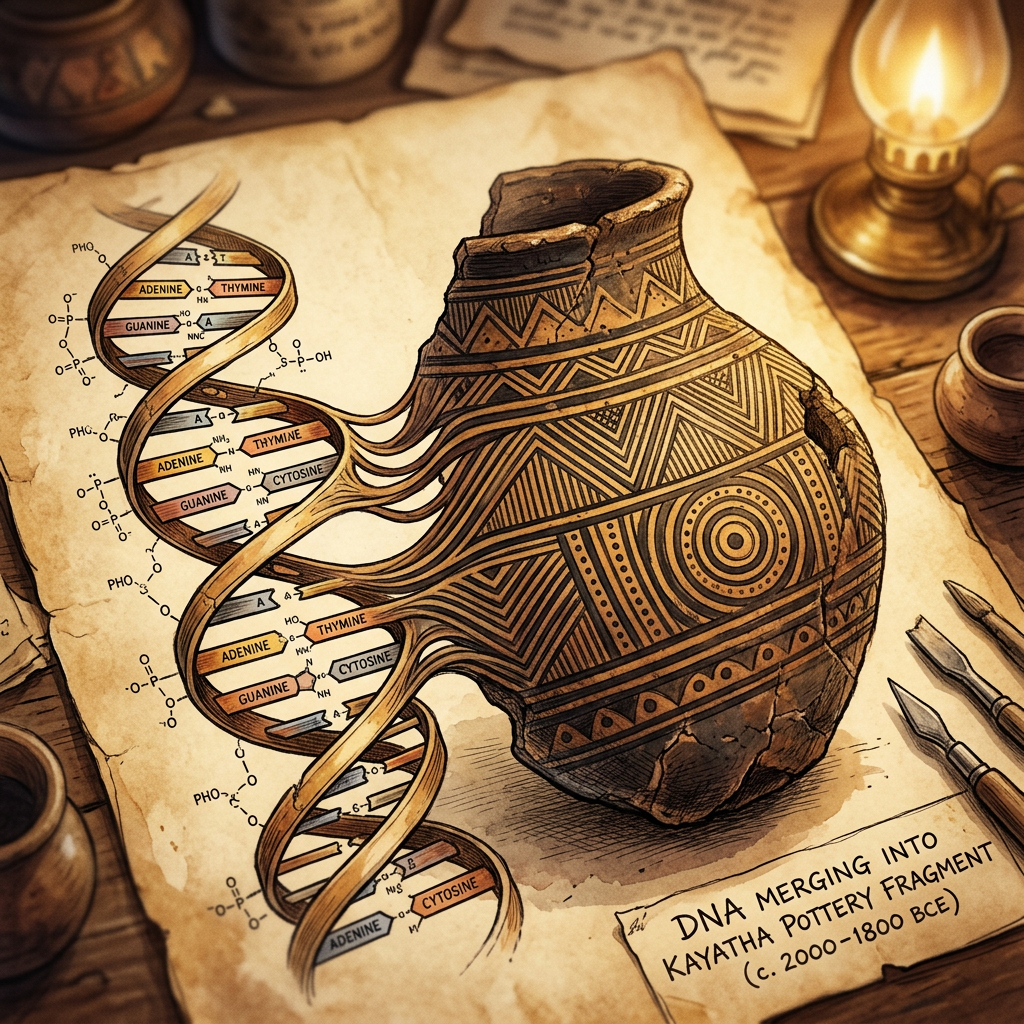
A breakthrough study published in Nature Communications has revealed the first genomic data from the Kayatha culture, an early Chalcolithic civilization in Central India. Researchers successfully sequenced the DNA of three individuals from a site near Ujjain, dating back to approximately 2000 BCE. The findings suggest that these populations possessed a distinct genetic profile that diverged significantly from both the contemporary Indus Valley populations and the later Vedic-era migrations.
The study highlights a complex ancestry composed of indigenous hunter-gatherer lineages and a previously unknown 'ghost' population from the eastern Iranian plateau. This genetic mix indicates that Central India was a major crossroads of migration much earlier than previously hypothesized. Lead geneticist Dr. Aruna Sharma noted that the Kayatha individuals show specific markers for resistance to tropical pathogens, suggesting long-term environmental adaptation in the Malwa region.