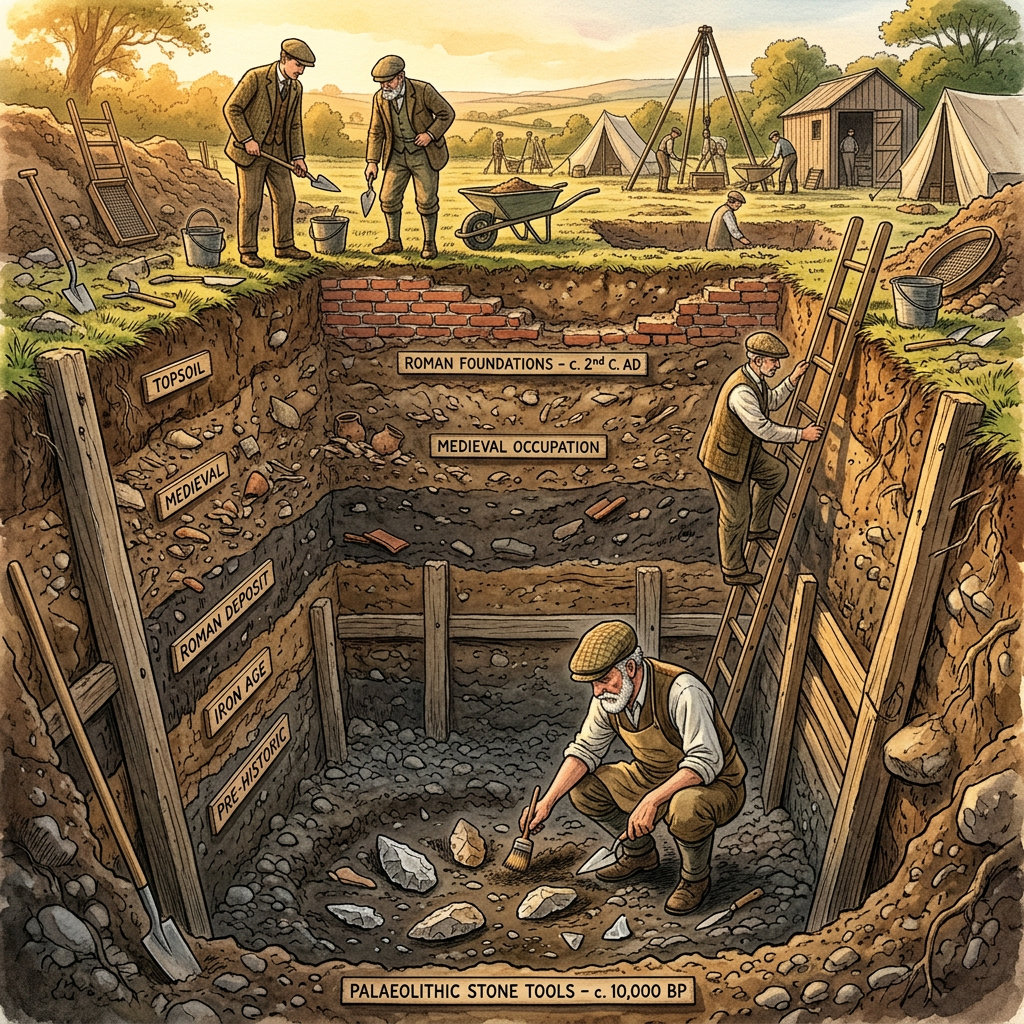
A team from the Archaeological Survey of India (ASI) has completed a preliminary dig at Kotri-Nath, a newly discovered site in the Aravalli foothills. The excavation has yielded a continuous stratigraphic record showing a clear transition from Neolithic pit dwellings to the sophisticated fired-brick architecture characteristic of the Mature Harappan civilization. This find is critical for understanding the indigenous roots of urbanism in the Indian subcontinent.
Artifacts recovered include early handmade pottery transitioning into wheel-turned polychrome vessels, as well as the earliest known examples of lapis lazuli processing in the region. The discovery suggests that the Aravalli Range served as a vital resource hub that fueled the technological leap toward the Indus Valley's famous urban planning and long-distance trade networks.