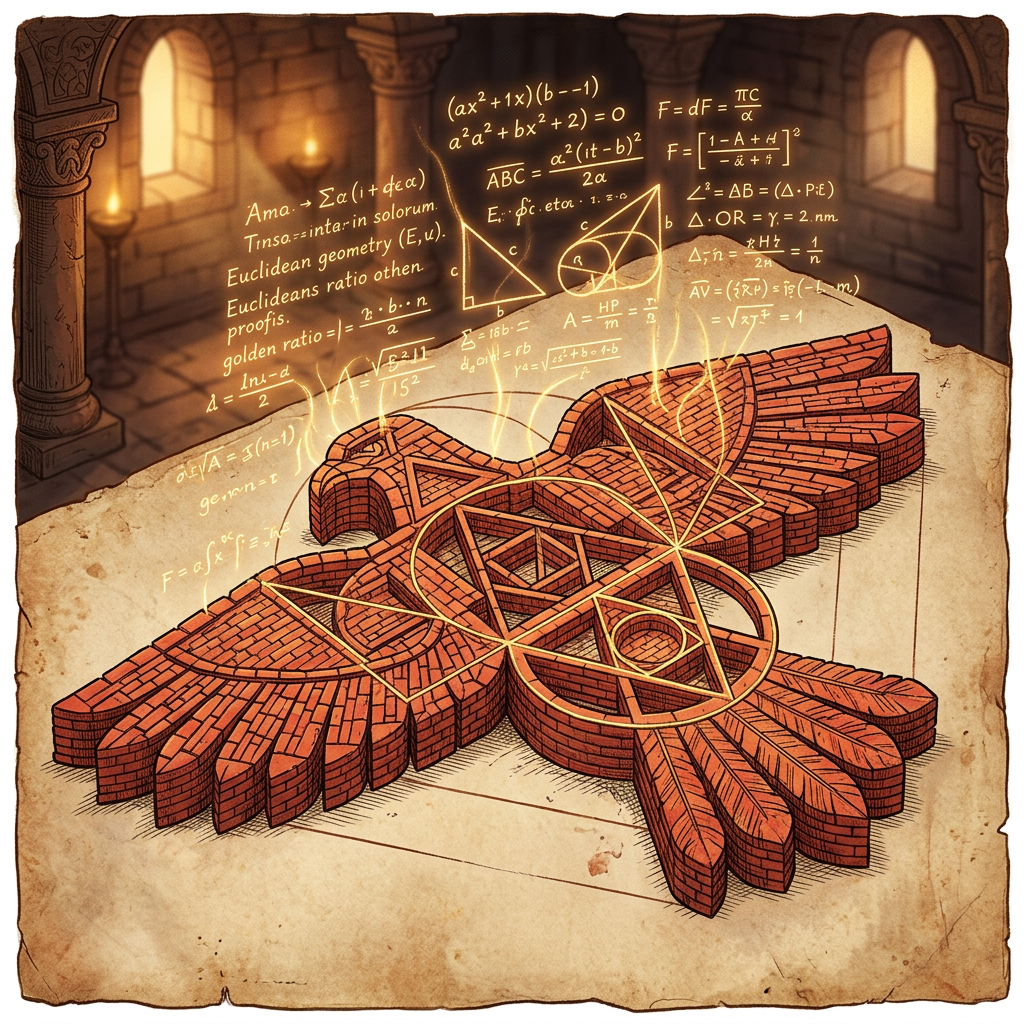
Research published in the Academic Journal of Mathematics and History has identified sophisticated fractal geometry within the 'Agni-Cayana' fire altars described in the Sulba Sutras. By performing a 3D structural analysis of reconstructed altars, mathematicians discovered that the layering of bricks follows a specific recursive logic where the area of each layer maintains a constant ratio to the perimeter of the whole structure.
The study argues that these rituals were not merely religious but served as practical laboratories for complex geometry. The use of 'isaka' (bricks) of varying shapes to create a perfect square area through iterative growth demonstrates that ancient Indian mathematicians had conceptualized the foundations of self-similar fractals and irrational number sequences as early as 800 BCE.