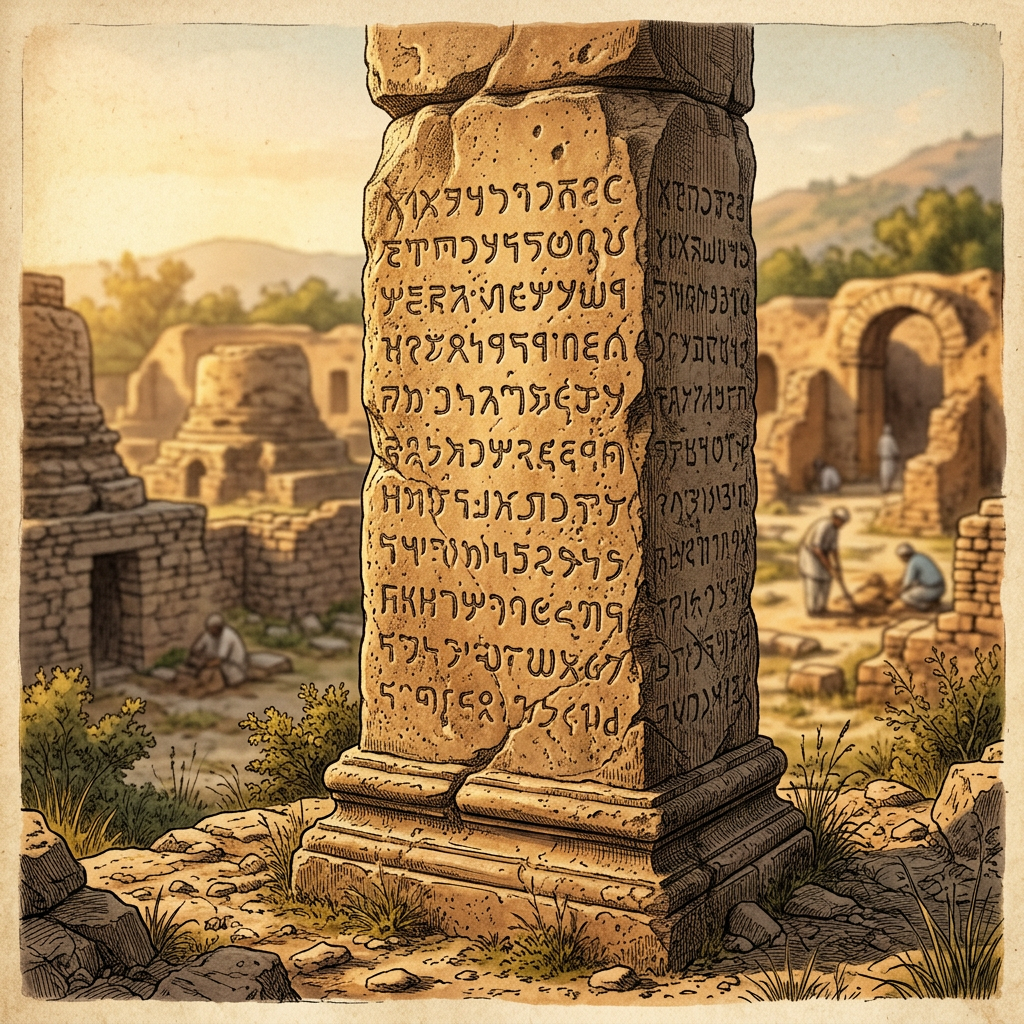
A series of stone inscriptions discovered at the Sirkap mound in Taxila has revealed a sophisticated discourse on the philosophy of ethical kingship. The inscriptions, written in Kharosthi script, are believed to record a dialogue between the Indo-Greek King Menander I and a local Brahmin sage regarding the duties of a 'Rajarshi' (philosopher-king).
The text blends Hellenistic concepts of Eudaimonia (happiness) with Indian Dharma-shastra principles, arguing that the stability of a kingdom rests on the ruler's mastery over his own senses. This find offers a new lens through which to view the philosophical synthesis that defined the Indo-Greek kingdoms of the 2nd century BCE.