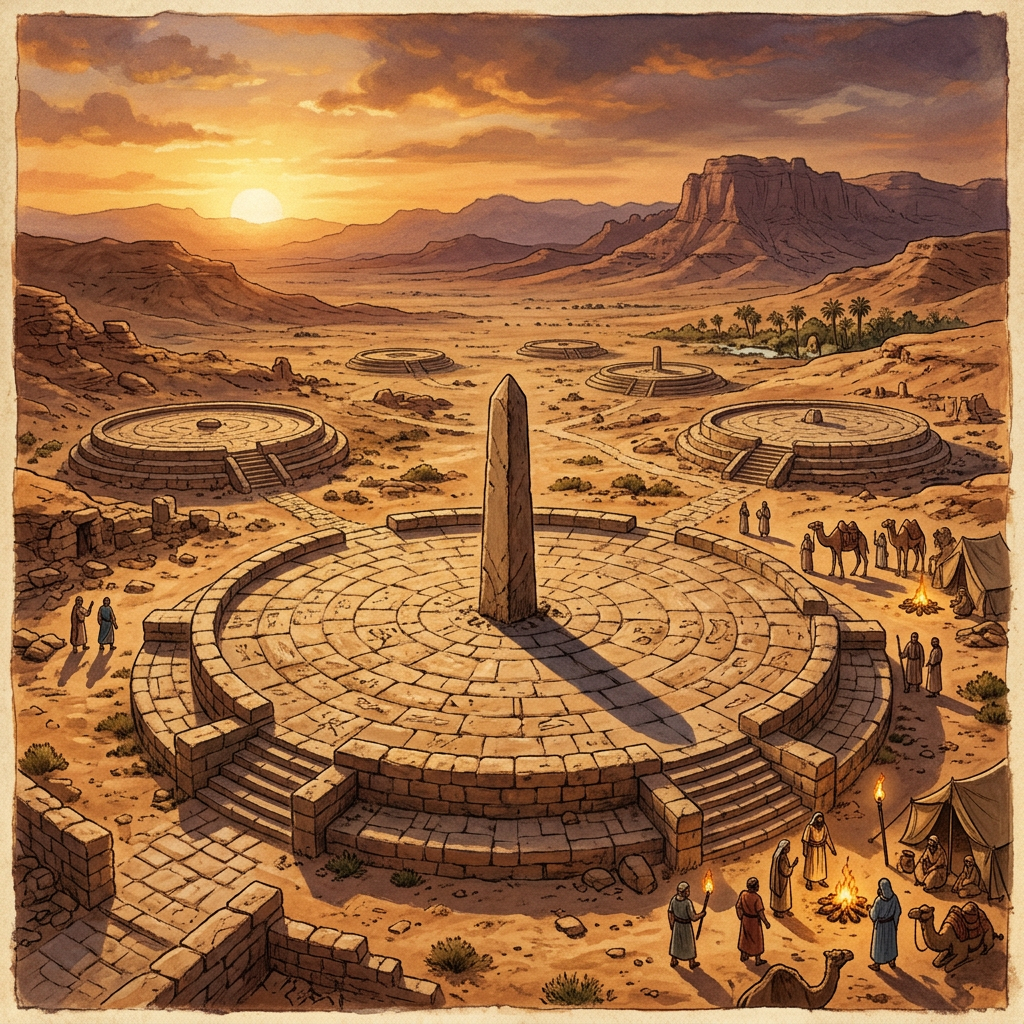
In a remote sector of the Thar Desert, researchers have identified a unique Mature Harappan settlement specifically designed for celestial observation. The site features a series of circular stone platforms with central sockets, which archaeologists believe held vertical gnomons used to track the movement of the sun and stars for the Indus Valley civilization's agricultural calendar.
The orientation of the main structures aligns perfectly with the summer and winter solstices. This discovery suggests that the Harappans possessed a much more formalized system of 'state astronomy' than previously thought, allowing them to coordinate planting cycles across the vast distances of their trade network. Fragments of inscribed pottery found at the site contain symbols that may represent early constellations.