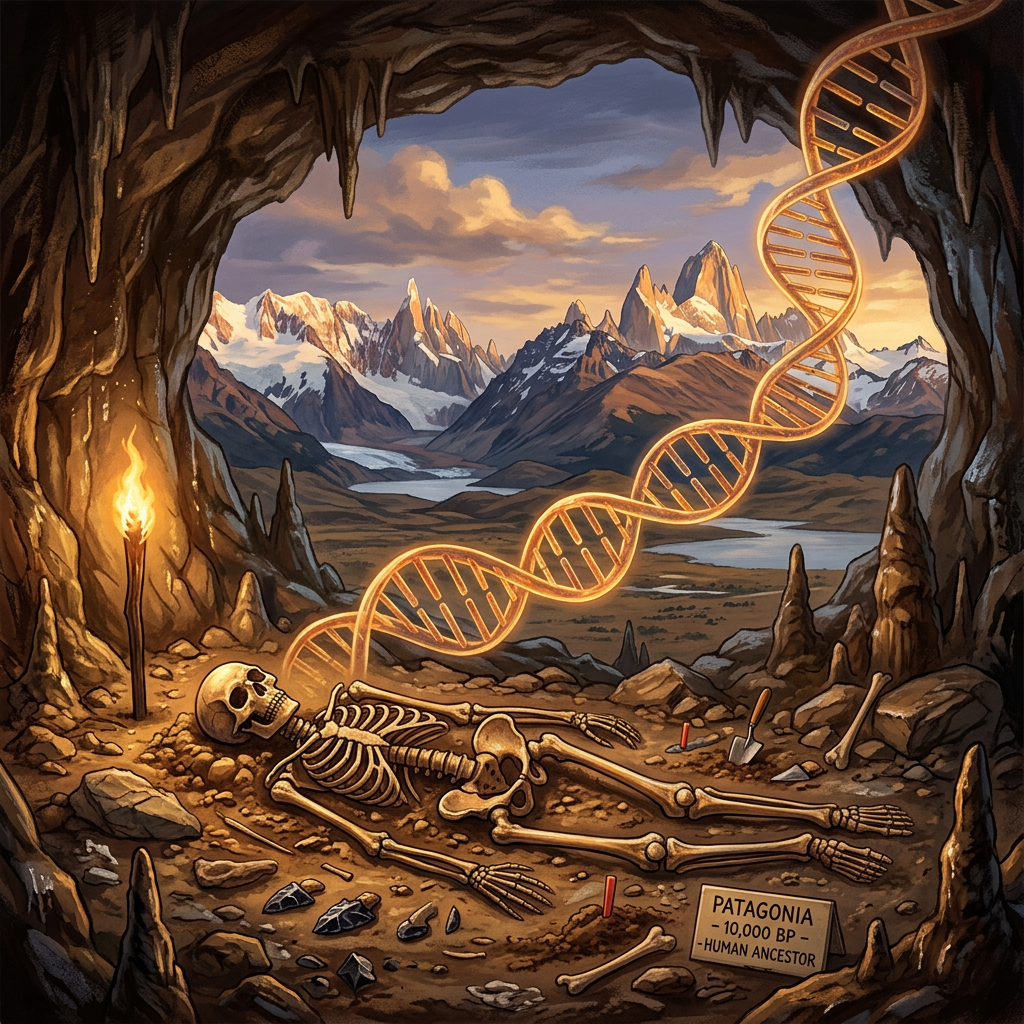
A breakthrough paleogenomic study published in Nature Genetics has successfully sequenced the DNA of remains found in the Baño Nuevo 1 cave in Chile, dating back 10,000 years. The research identifies a previously unknown genetic lineage that suggests the initial peopling of the South American tip was far more complex than a single migratory wave. This ancient DNA (aDNA) analysis reveals that these early hunter-gatherers carried unique alleles that branched off from the main North American Paleo-Indian trunk much earlier than previously modeled.
The study also highlights specific genetic adaptations related to metabolic efficiency in extreme cold, providing the first physiological evidence of how early humans survived the harsh Holocene environments of Patagonia. This data reshapes the anthropological understanding of the 'Pacific Coastal Route' and suggests that isolated populations thrived in the southern cone for millennia without significant gene flow from northern tribes.