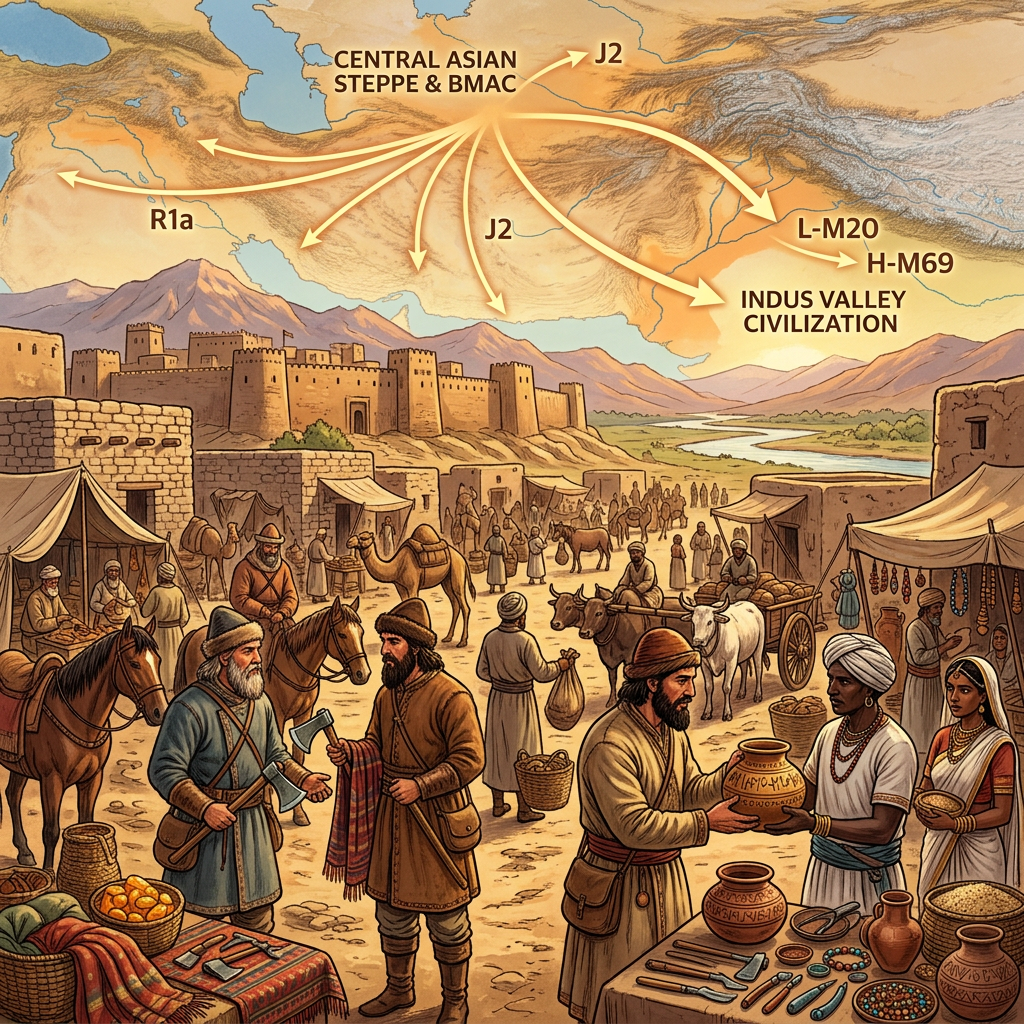
New paleogenomic research conducted on remains from the Bactria-Margiana Archaeological Complex (BMAC) at Gonur Tepe has identified a significant 'Harappan' genetic signature in 15% of the sampled individuals. The study, appearing in Science Advances, utilizes high-coverage whole-genome sequencing to prove that the Indus Valley Civilization maintained permanent migrant colonies in Central Asia for trade and craft specialization.
The analysis shows that these individuals were not transient traders but integrated members of the BMAC society, as evidenced by multi-generational genetic markers. This provides the strongest evidence to date of a 'trans-regional marriage network' that facilitated the flow of technological knowledge, such as tin-bronze metallurgy and bead-making, across the Bronze Age world.