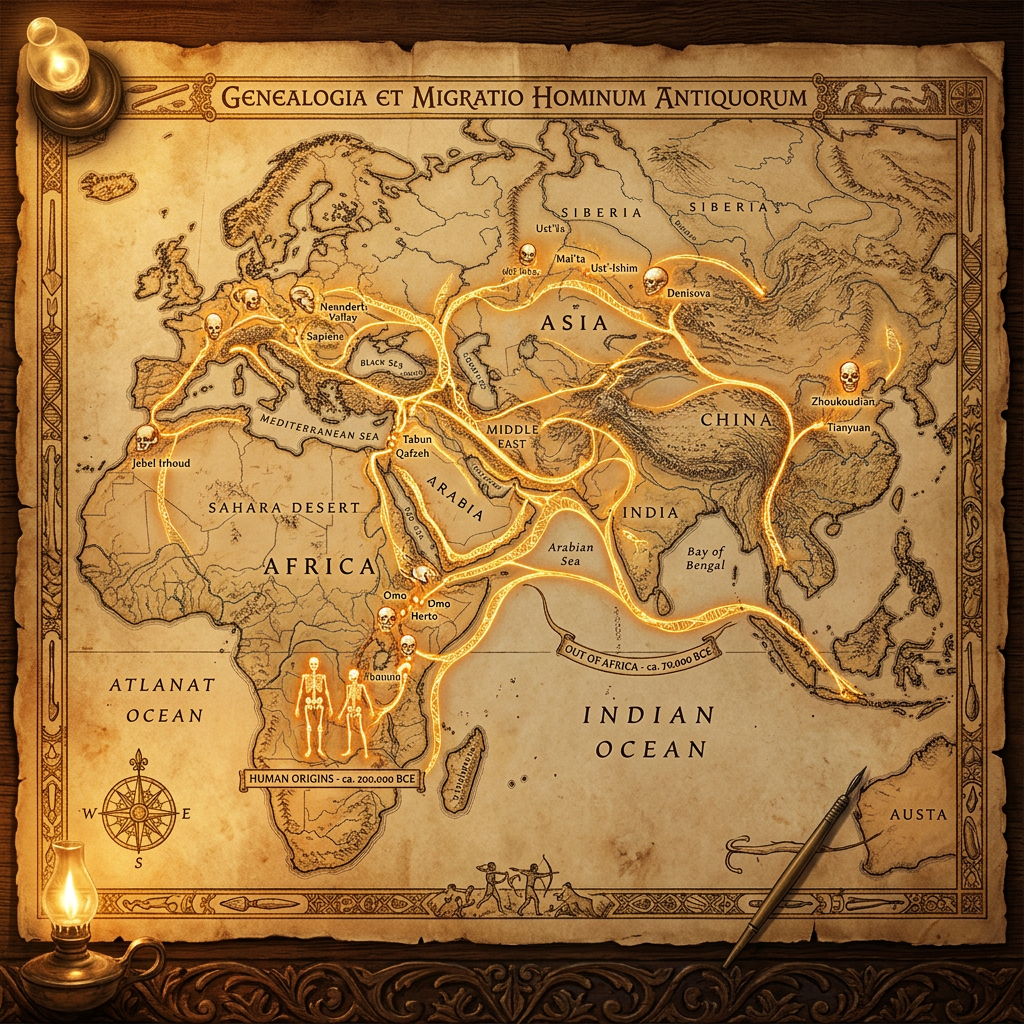
Researchers have published a comprehensive genomic map in Nature tracing the dispersal of modern humans from North Africa during the early Holocene. By analyzing newly discovered skeletal fragments from the Jebel Irhoud region, the study identifies a 'ghost' population that contributed genetic material to both Western European hunter-gatherers and early Levantine farmers.
This genomic reconstruction challenges the 'Out of Africa' simplicity by suggesting a 'Pan-African' origin of modern humans where multiple regional groups interbred over 300,000 years before migrating. The research utilized advanced proteomic dating alongside DNA sequencing to confirm that these lineages were already culturally distinct, possessing specialized stone tool kits adapted for varied ecological niches across the Sahara.