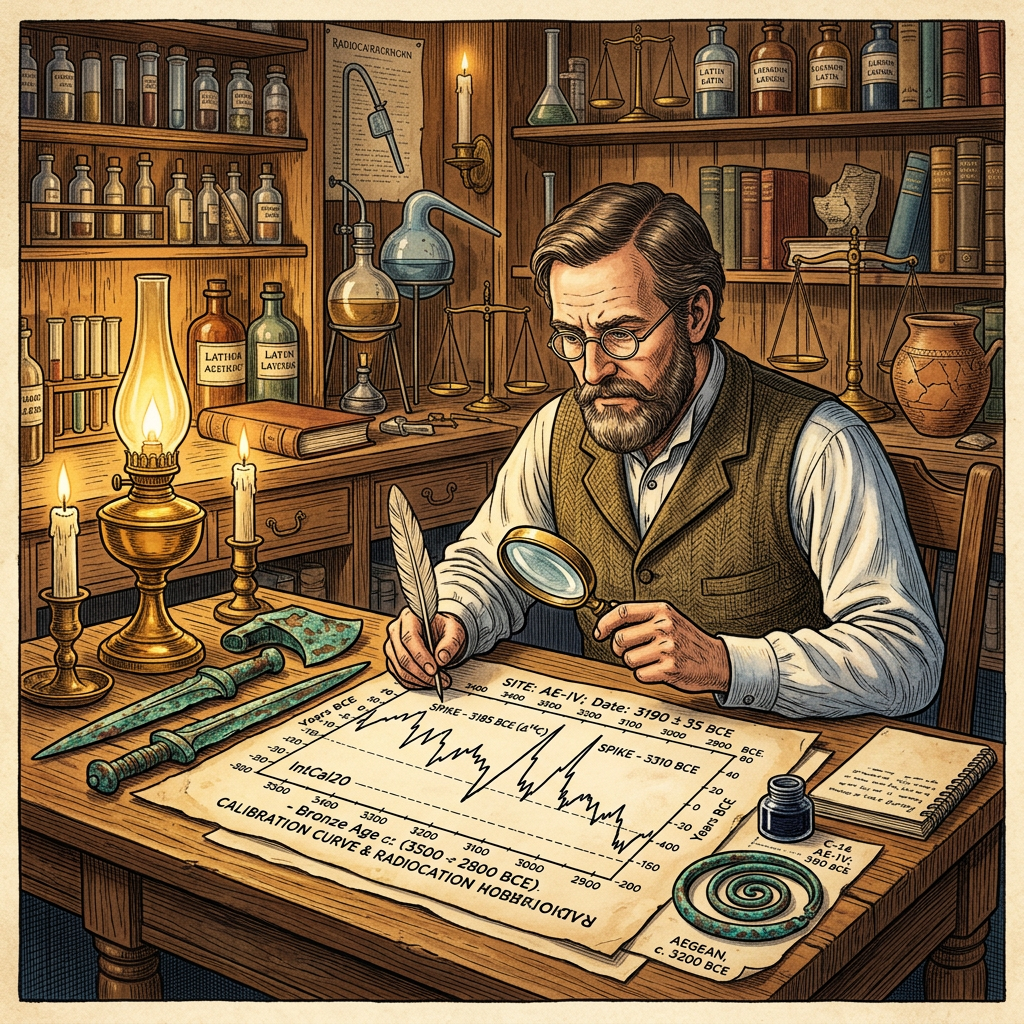
A research team at the Oxford Radiocarbon Accelerator Unit has announced a significant breakthrough in archaeological dating techniques. By utilizing a new 'Carbon-14 Pulse' methodology—which synchronizes radiocarbon fluctuations with high-resolution tree-ring data—scientists have refined the timeline for the Vinča culture in the Balkans. The new data suggests that specialized copper smelting began as early as 5400 BCE, nearly 400 years earlier than current academic consensus.
This refined dating technique allows researchers to bypass traditional 'plateaus' in the carbon calibration curve that often obscure short-term chronological shifts. The study, published in Archaeometry, argues that the rapid expansion of metallurgical knowledge in Southeast Europe was linked to a specific period of climatic stability, facilitating the trade of ore across vast distances during the Early Copper Age.