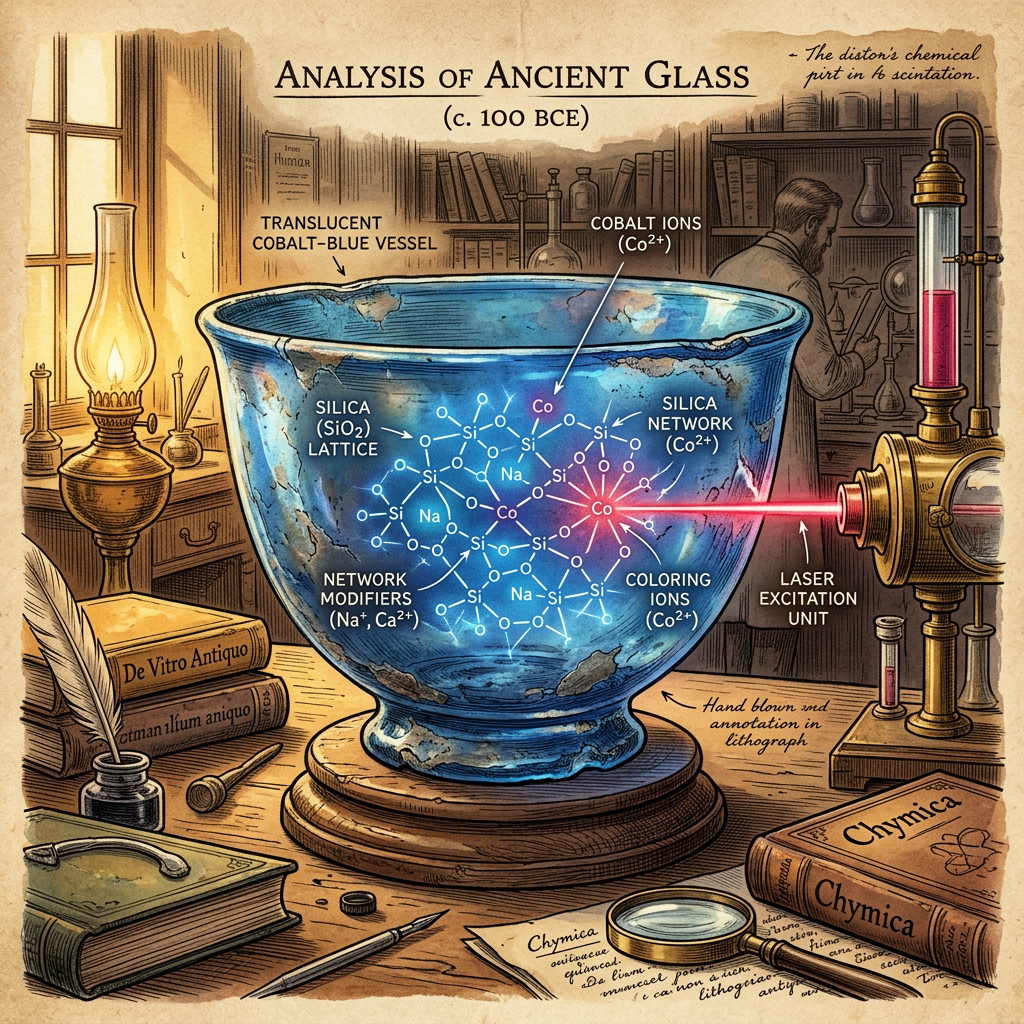
New research published in the Journal of Archaeological Science has utilized laser ablation inductively coupled plasma mass spectrometry (LA-ICP-MS) to analyze the chemical composition of glass artifacts from the Kushan Empire. The study found that 2nd-century glassmakers in the Gandhara region were not merely importing Roman glass but were practicing a sophisticated form of chemical hybridization, blending Mediterranean soda-lime-silica recipes with local mineral decolourisers.
This scientific research suggests a much deeper level of technological exchange than previously assumed. The Kushan craftsmen were able to manipulate the thermal properties of the glass to create intricate 'ribbed' bowls and 'millefiori' patterns that were specifically tailored to the tastes of the Silk Road elite, proving that ancient Indian metallurgical and chemical arts were part of a globalized industrial network.