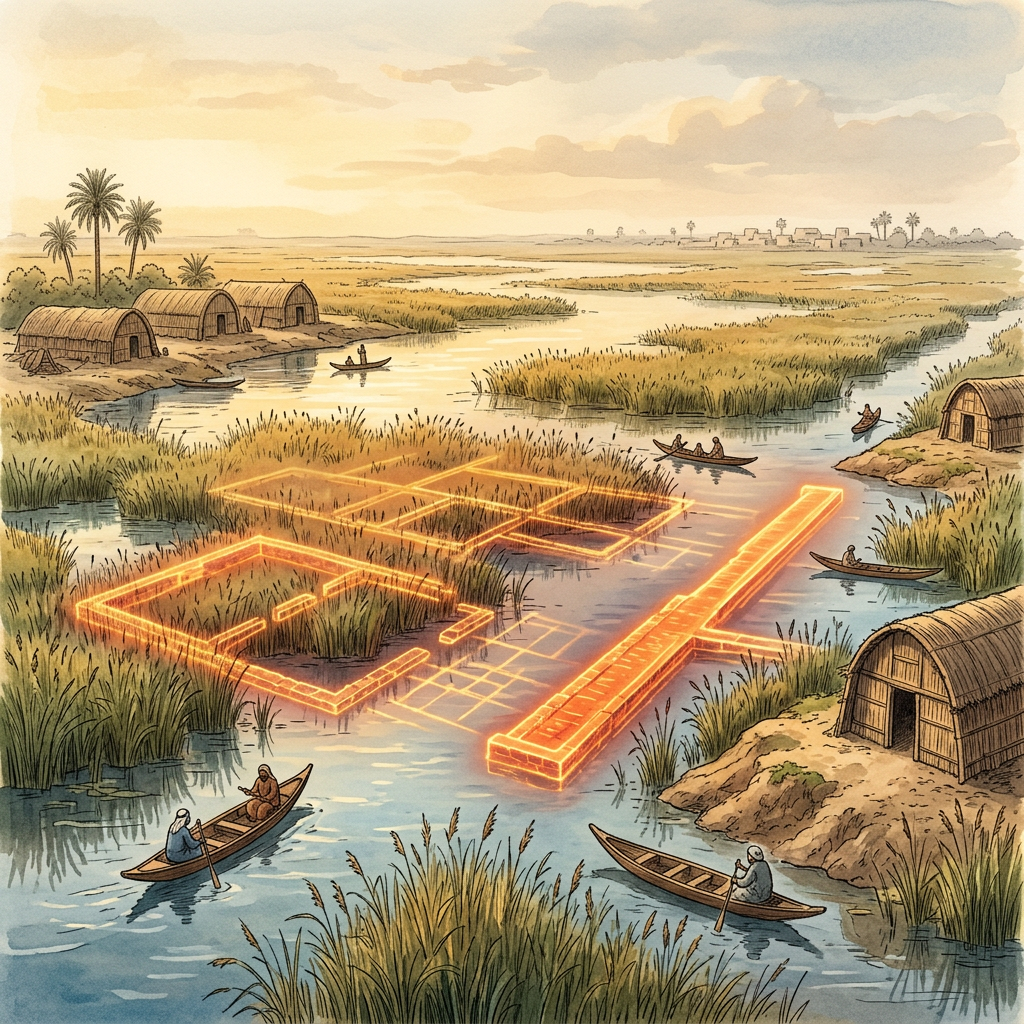
Researchers using satellite-based thermal infrared imaging have identified the buried outlines of a major administrative and trade hub located in the marshes of Dhi Qar province, Iraq. The signature of the buried structures suggests a massive river port dating to the Early Dynastic III period of Sumer. The site includes a monumental quay, large storage magazines, and what appears to be a residential district for foreign merchants.
Dr. Samir Al-Hussaini noted that the port likely served as a primary gateway for goods arriving from the Persian Gulf, such as copper from Magan and timber from Meluhha. The thermal data revealed a large 'canal-lock' system, which would be the earliest known example of such hydraulic engineering in Mesopotamia. This finding is expected to reshape understanding of the logistics behind the rapid urbanization of ancient Sumerian city-states.