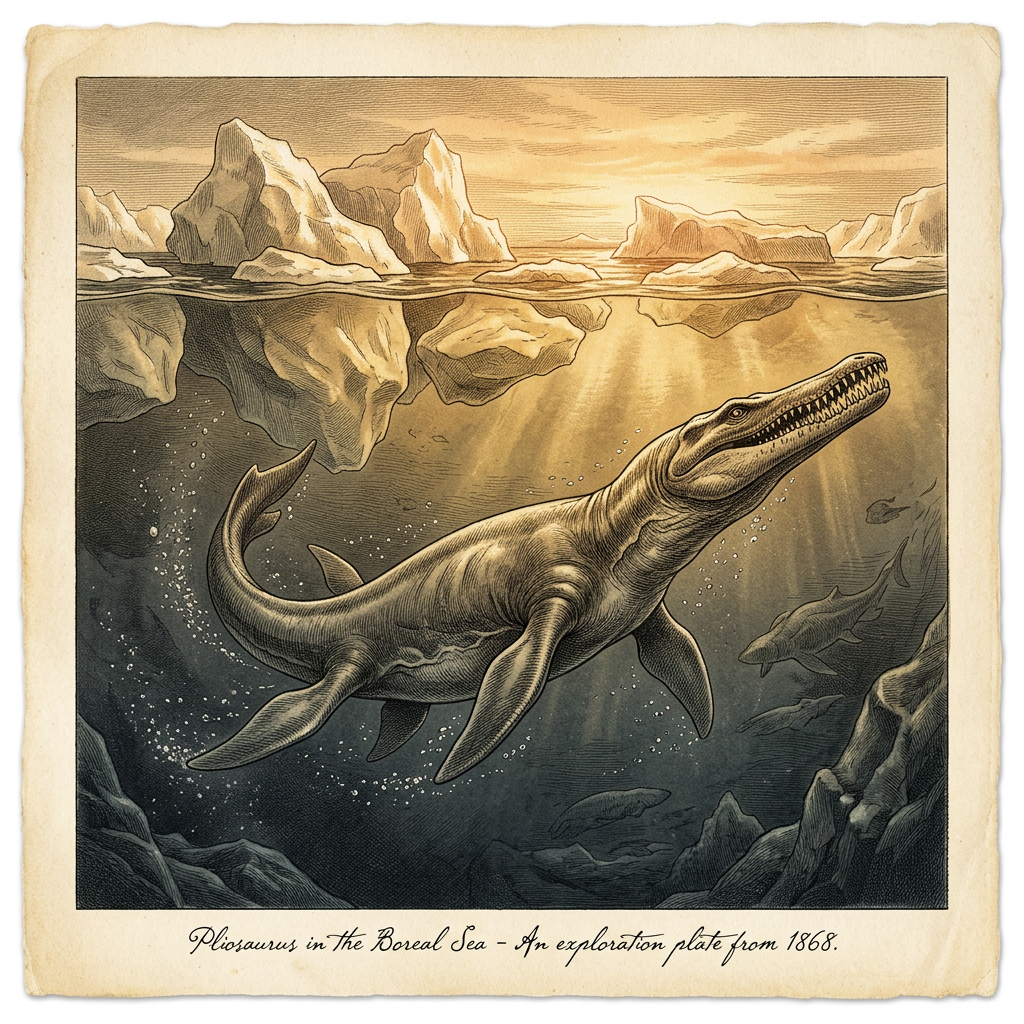
A joint expedition in the Canadian Arctic has discovered the partial skeleton of a new species of giant marine reptile, Arctosuchus borealis, a type of mosasaur adapted to cold-water environments. The fossils, dating to the Late Cretaceous, were found on Ellesmere Island and include a large portion of the skull and spinal column. Unlike its tropical relatives, this 'Polar Mosasaur' possessed physiological adaptations for thermoregulation and enhanced night vision.
The find is significant as it proves that these apex predators had expanded into high-latitude ecosystems much earlier than hypothesized. Analysis of the fossilized bone structure suggests the animal was over 12 meters long and likely fed on large fish and smaller marine reptiles during the long polar nights. The discovery provides a new perspective on the resilience and diversity of marine life during the greenhouse world of the Cretaceous period.