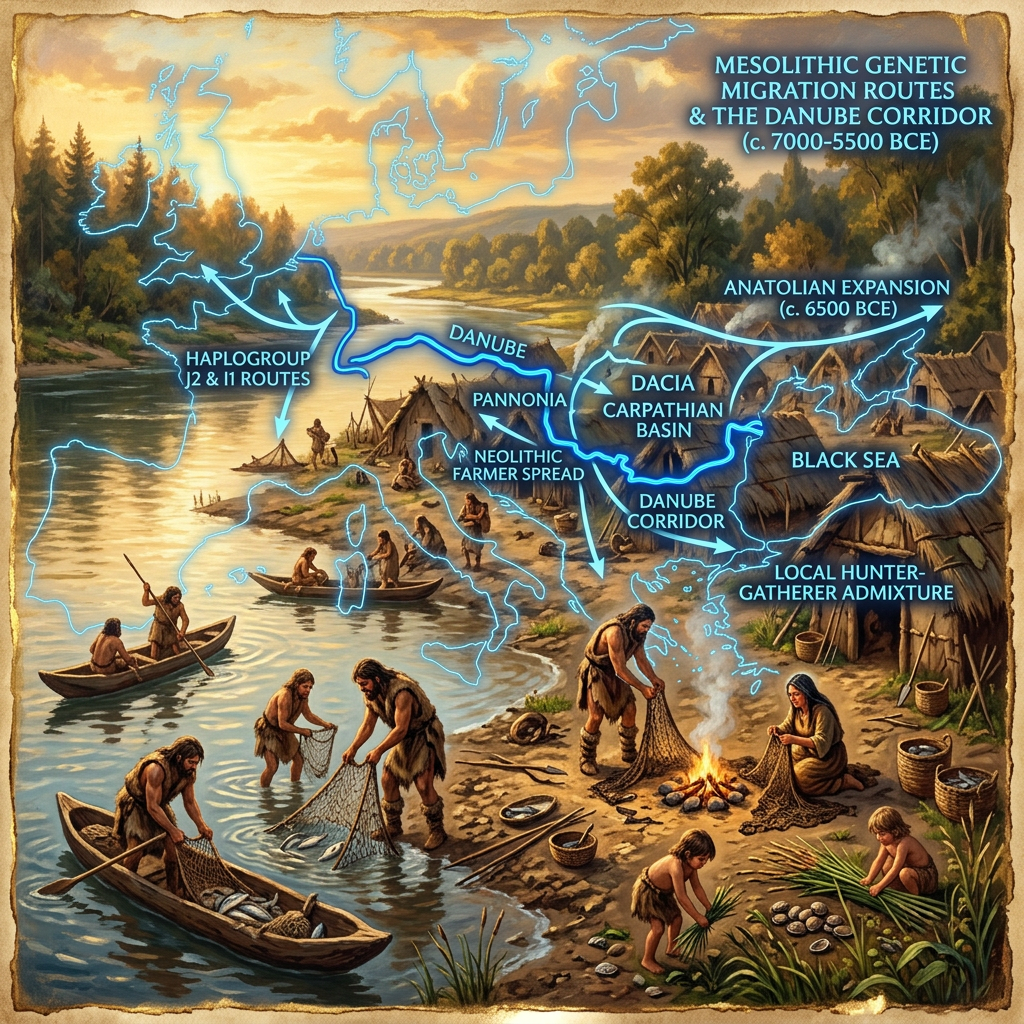
Research published in Science Advances has provided a new genomic profile of the Mesolithic inhabitants of the Iron Gates region of the Danube. By sequencing the genomes of 30 individuals from Lepenski Vir, scientists identified the earliest known genetic markers associated with high-density riverine living, including adaptations to waterborne pathogens and a diet high in freshwater protein.
The study reveals that this population remained genetically distinct from incoming Anatolian farmers for nearly a millennium, suggesting a unique social and biological resilience among Europe's last complex hunter-gatherers. This paleogenomic data offers a new perspective on how human biology adapted to the specific ecological niches provided by major river systems prior to the full adoption of agriculture.