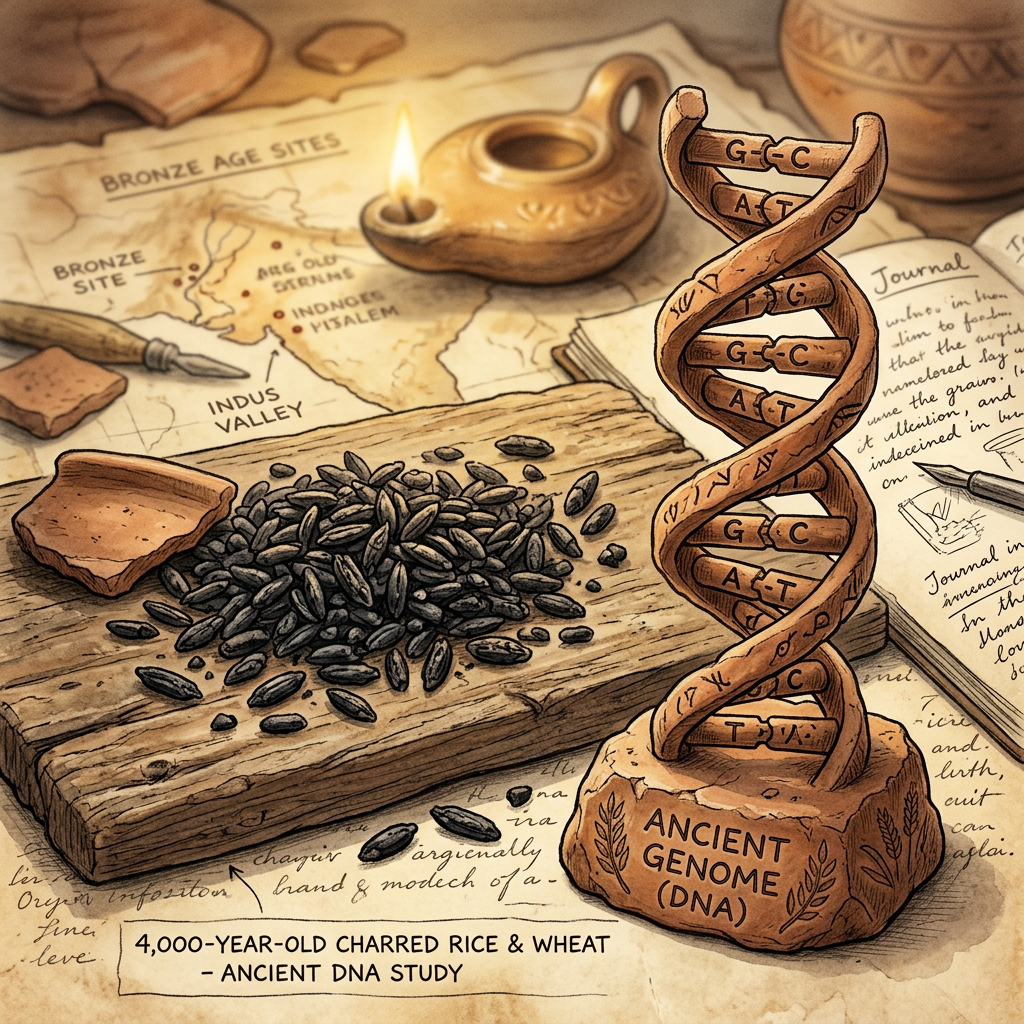
A new paleogenomic study led by the Institute of Archaeological Science has identified specific genetic adaptations in Neolithic remains from the Longshan culture in China. By sequencing the genomes of 45 individuals, scientists discovered markers associated with metabolic resilience to a mixed diet of rice and wheat. This genetic evidence suggests that the transition to complex multicropping systems was accompanied by rapid biological adaptation in human populations as they moved from purely riverine environments to more diverse agricultural landscapes.
Furthermore, the study reveals a significant genetic influx from Northern Steppe groups during this period, coinciding with the introduction of wheat and barley to the region. This interbreeding event likely accelerated the spread of agricultural technology and dietary flexibility, providing a genomic blueprint for the success of early East Asian civilizations. The findings challenge the traditional 'single-origin' model of farming, suggesting a more mosaic-like development of Neolithic technology.