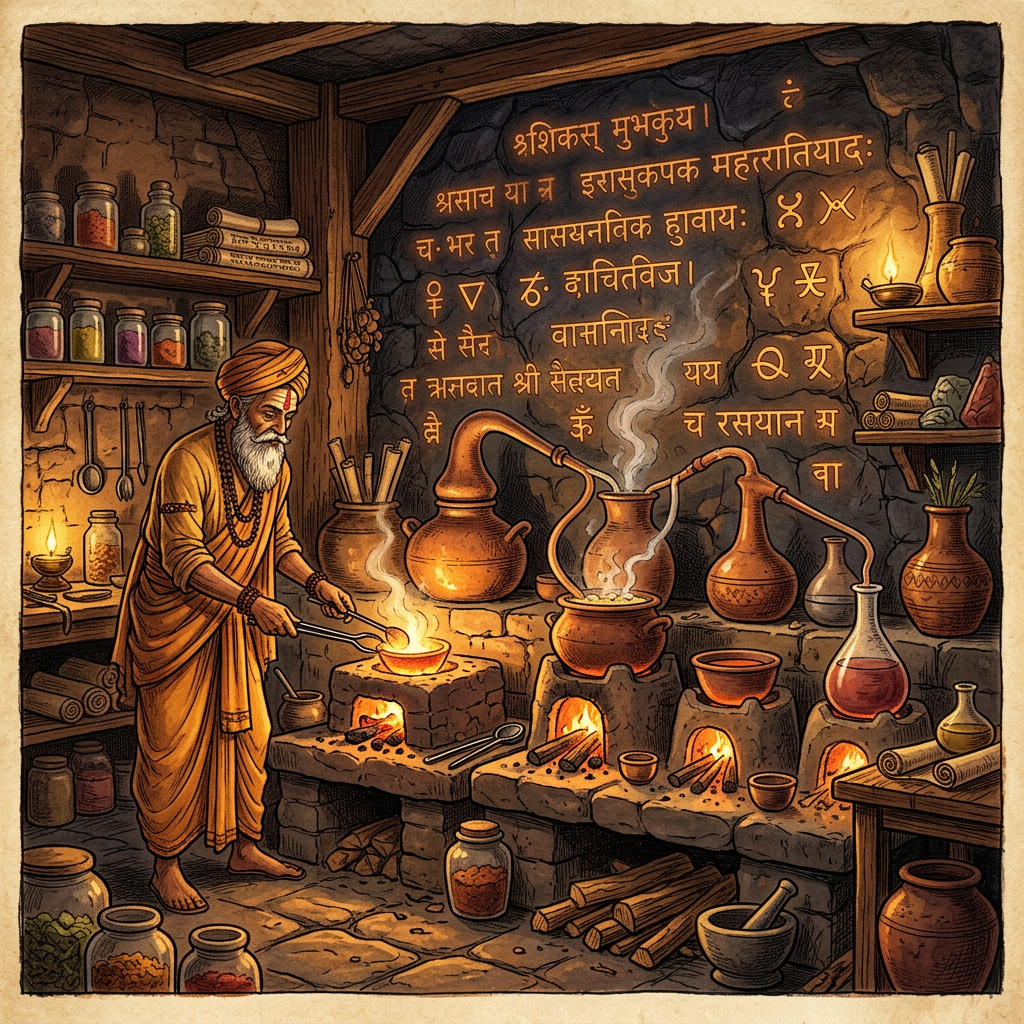
In a major breakthrough for the history of science, researchers at the National Institute of Advanced Studies have reconstructed fragmented 8th-century Siddha manuscripts that describe advanced techniques for mineral purification. Using multispectral imaging and AI-based linguistic reconstruction, the team deciphered protocols for the precipitation of mercury and sulfur compounds. These texts predate similar European chemical descriptions by several centuries, showcasing a mature tradition of 'Rasa Shastra' or ancient Indian alchemy.
The manuscripts provide specific formulas for creating 'Kajjali' (mercuric sulfide) through controlled thermal reactions and sedimentation. Scholars believe these processes were used to create stable, bio-available forms of minerals for medicinal use. The findings indicate that the Siddha tradition possessed an empirical understanding of chemical states and phase transitions, treating alchemy as a rigorous experimental science focused on the transformation of matter for human health.