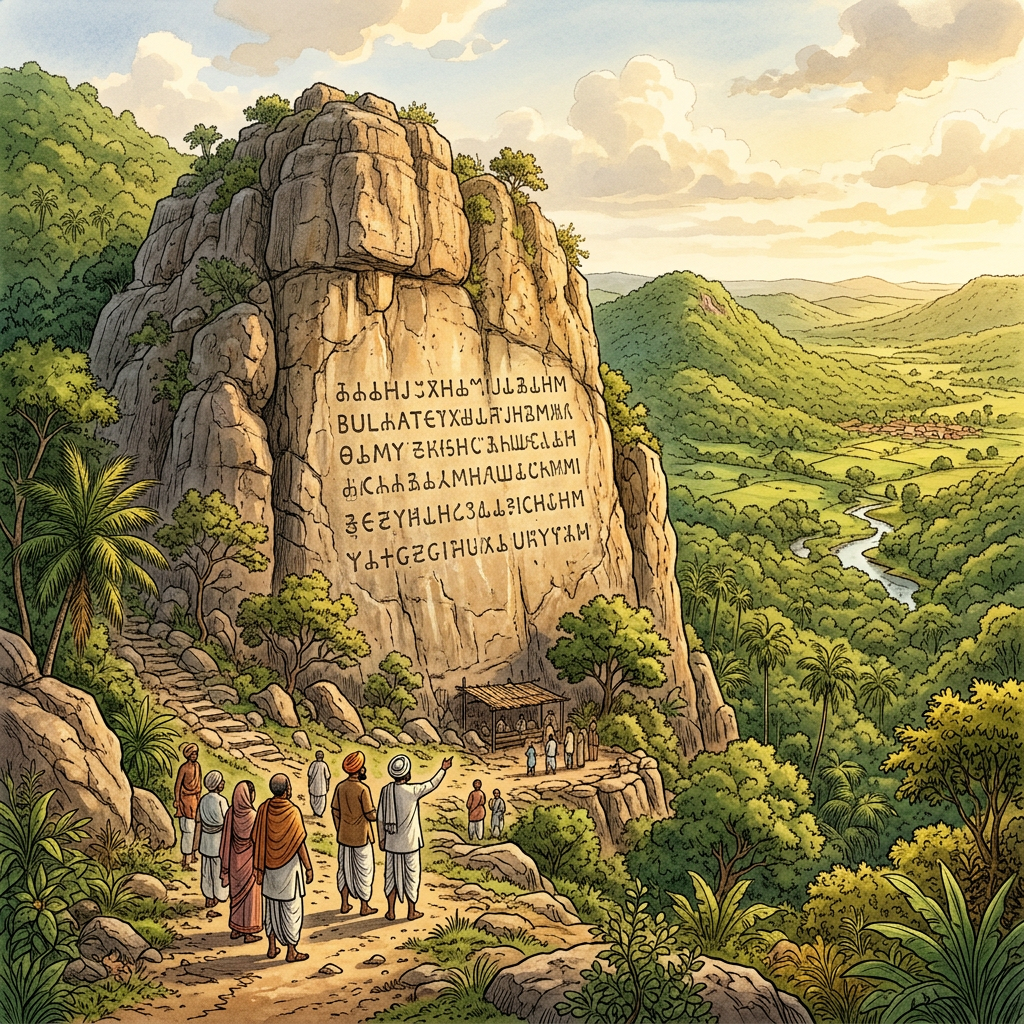
A new linguistic analysis of rock-cut inscriptions at an ancient site in Guntur, Andhra Pradesh, has revealed a proto-philosophical framework previously unknown to scholars. The inscriptions, written in Middle Indo-Aryan Prakrit, date to the 4th century CE and outline a concept called 'Sahabhava' or 'The Philosophy of Interdependence'.
The text suggests that no entity possesses an independent essence, a view that closely parallels Buddhist Sunyata but is framed here within a Vedic-influenced cosmological setting. This hybrid philosophy indicates a period of intense intellectual cross-pollination in the Deccan, where different wisdom traditions merged to form new ethical systems centered on mutual social and spiritual responsibility.