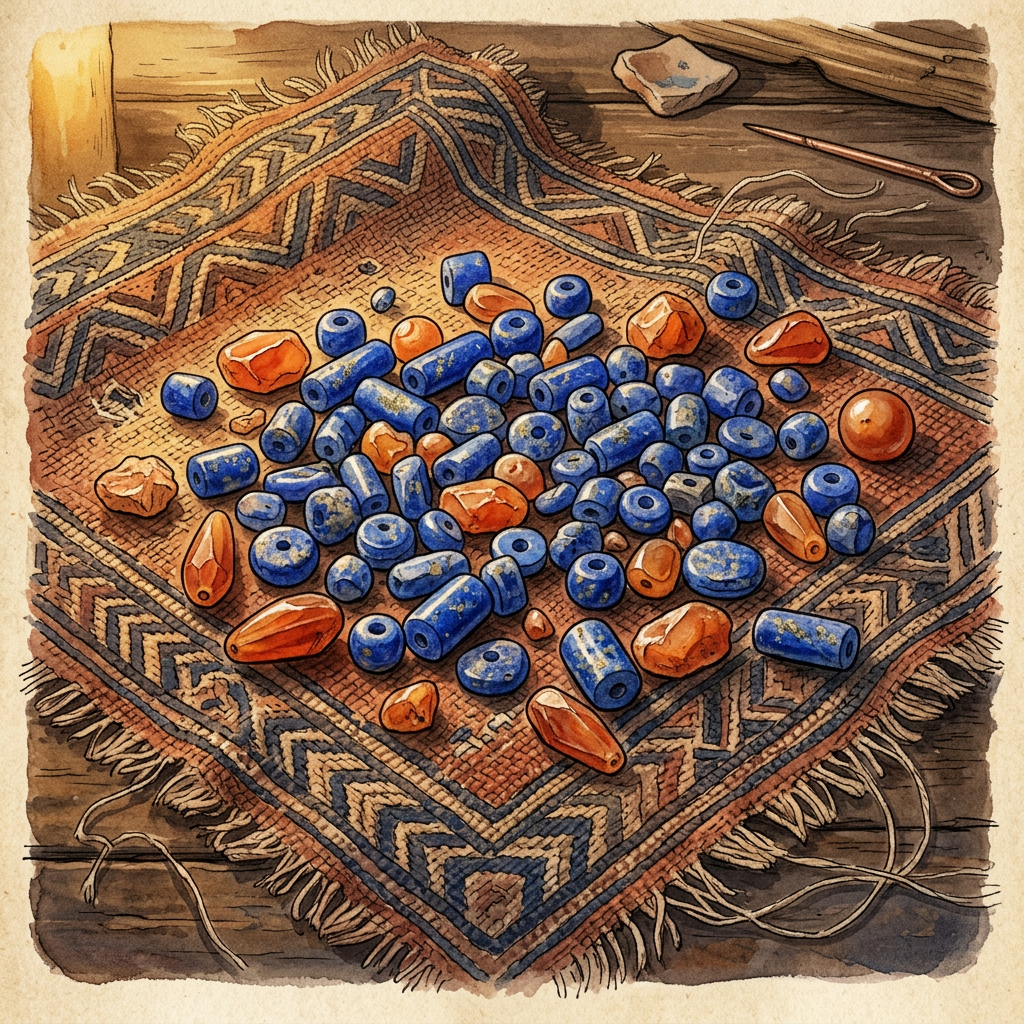
A new chemical study published in Archaeometry has used strontium and lead isotope analysis to trace the origin of semi-precious stone beads found at Malwa Culture sites in Central India. The results prove that the lapis lazuli was sourced directly from the Sar-e-Sang mines in the Pamir Mountains, confirming a 2,000-mile trade network that remained active long after the collapse of the Harappan cities.
The research suggests that the post-Harappan 'Chalcolithic' societies were not isolated rural clusters but maintained high-value exchange routes with Central Asian highlands. This discovery provides critical evidence for the continuity of trans-continental trade systems in the second millennium BCE.