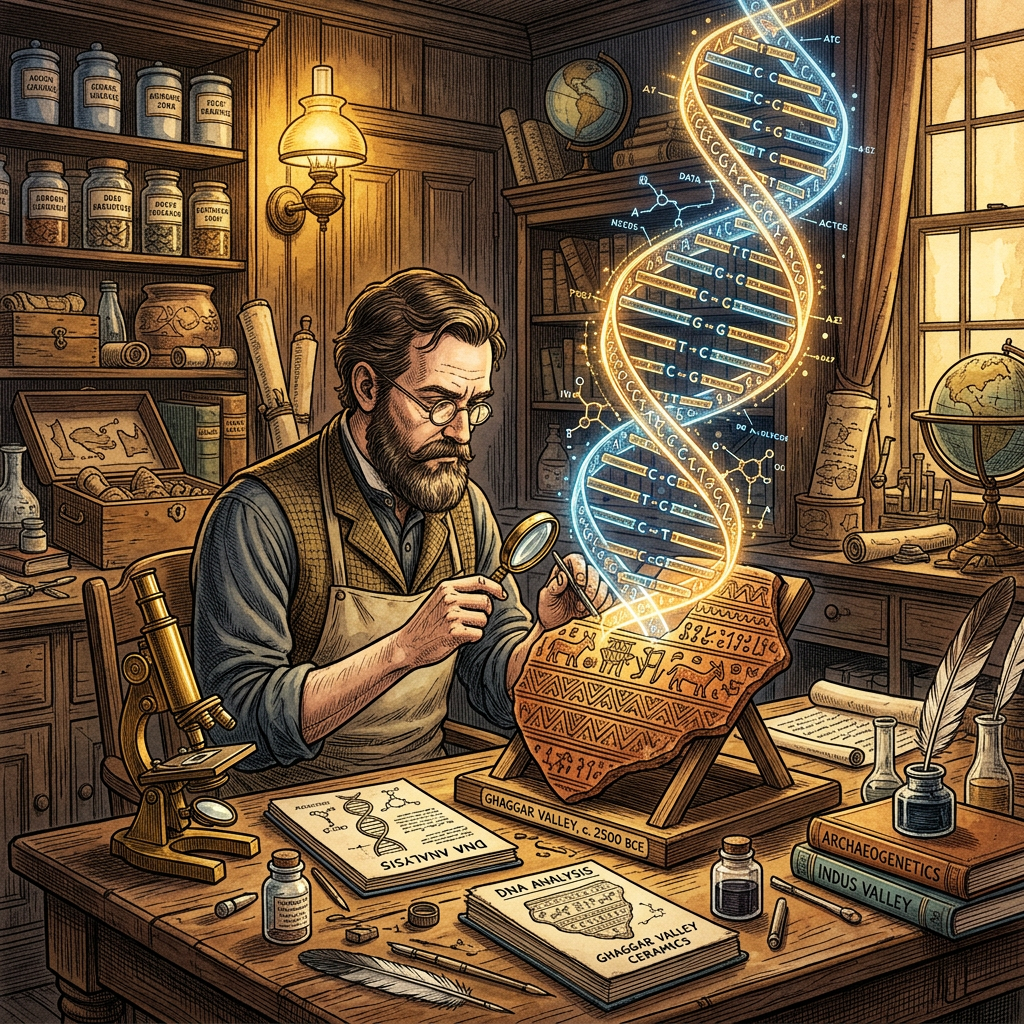
Researchers from the Indian Institute of Paleogenomics have successfully sequenced the first high-coverage genomes from the Sothi-Siswal culture, a key archaeological horizon in the Ghaggar-Hakra river basin. The study, published in Nature Genetics, reveals a distinct genetic pulse that predates the Mature Harappan phase, indicating a long-standing indigenous development of agricultural resilience in the region.
The analysis suggests that these early farming communities possessed specific genetic markers for metabolic efficiency, which likely aided their transition from semi-nomadic pastoralism to settled agriculture. This breakthrough provides a critical missing link in the genomic map of South Asia, showing that the genetic foundations of the Indus Valley Civilization were even more localized and diverse than previously hypothesized.