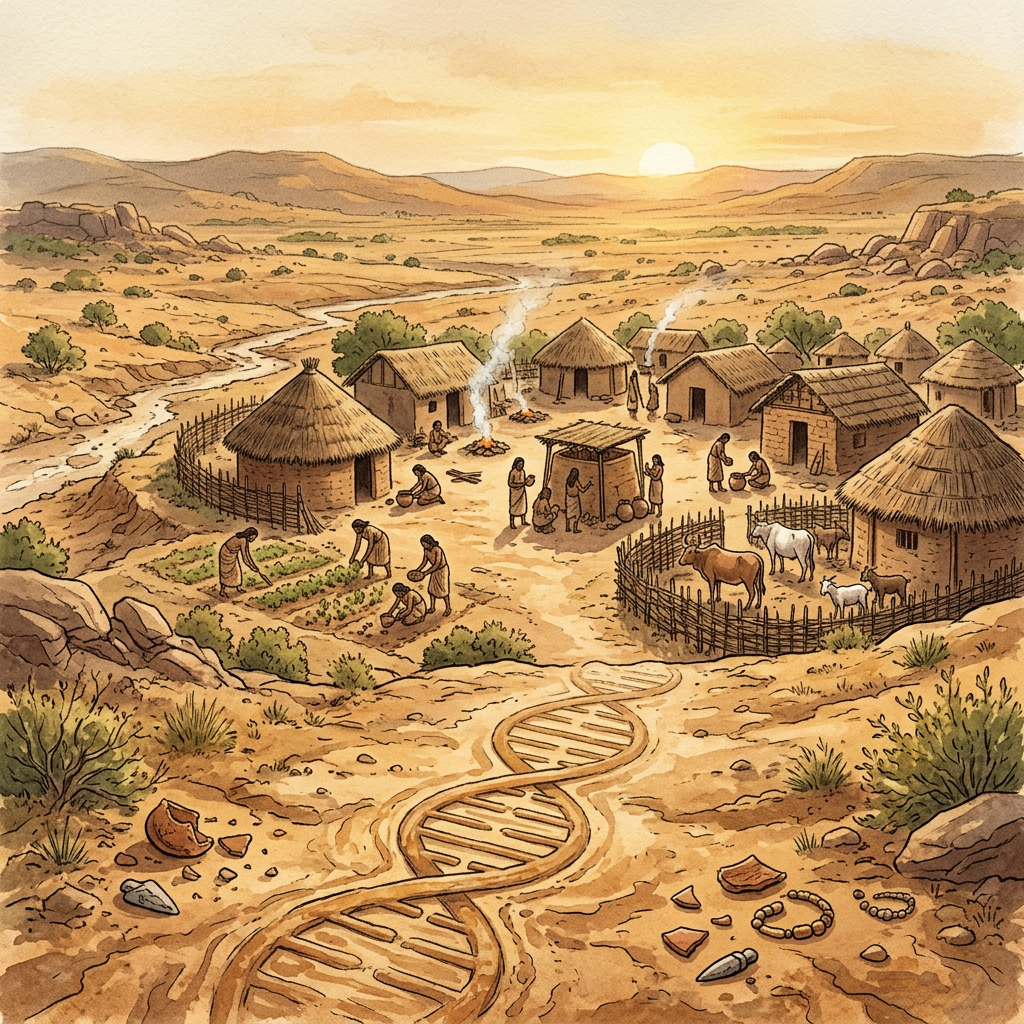
A major paleogenomic analysis of skeletal remains from the Inamgaon site has identified specific genetic markers associated with metabolic adaptation to high-heat and low-water environments. The study, appearing in Science Advances, shows that the Jorwe Culture populations of the Deccan Plateau underwent rapid natural selection as the region became increasingly arid during the second millennium BCE.
The research identifies a high frequency of alleles related to renal efficiency and thermal regulation, which are still prevalent in modern communities of the Western Ghats. This provides the first direct evidence of how climate-driven environmental stress shaped the genetic landscape of ancient India during the collapse of major urban centers.