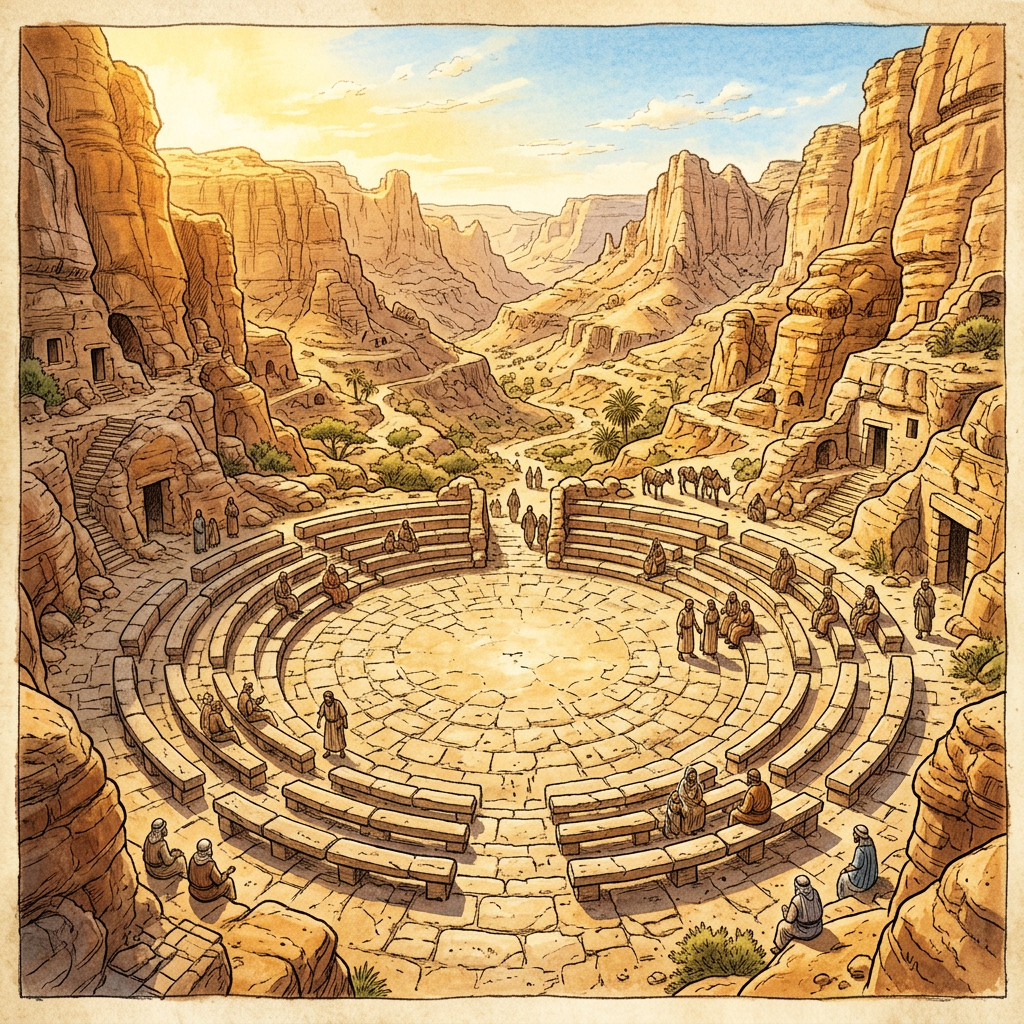
A team from the University of Jordan has revealed a massive, smoothed limestone plaza at the site of Beidha, which they believe served as one of the world's first dedicated festival spaces. Dated to approximately 9,000 BCE, the circular area shows signs of repetitive rhythmic impact, consistent with communal dancing. The site is surrounded by stone benches and cache pits containing polished stone beads and pigments.
Researchers argue that these Neolithic gatherings were the precursors to modern religious festivals, designed to foster social cohesion as human populations transitioned from hunting and gathering to settled agriculture. The lack of domestic refuse in this specific zone highlights its sacred and celebratory function.