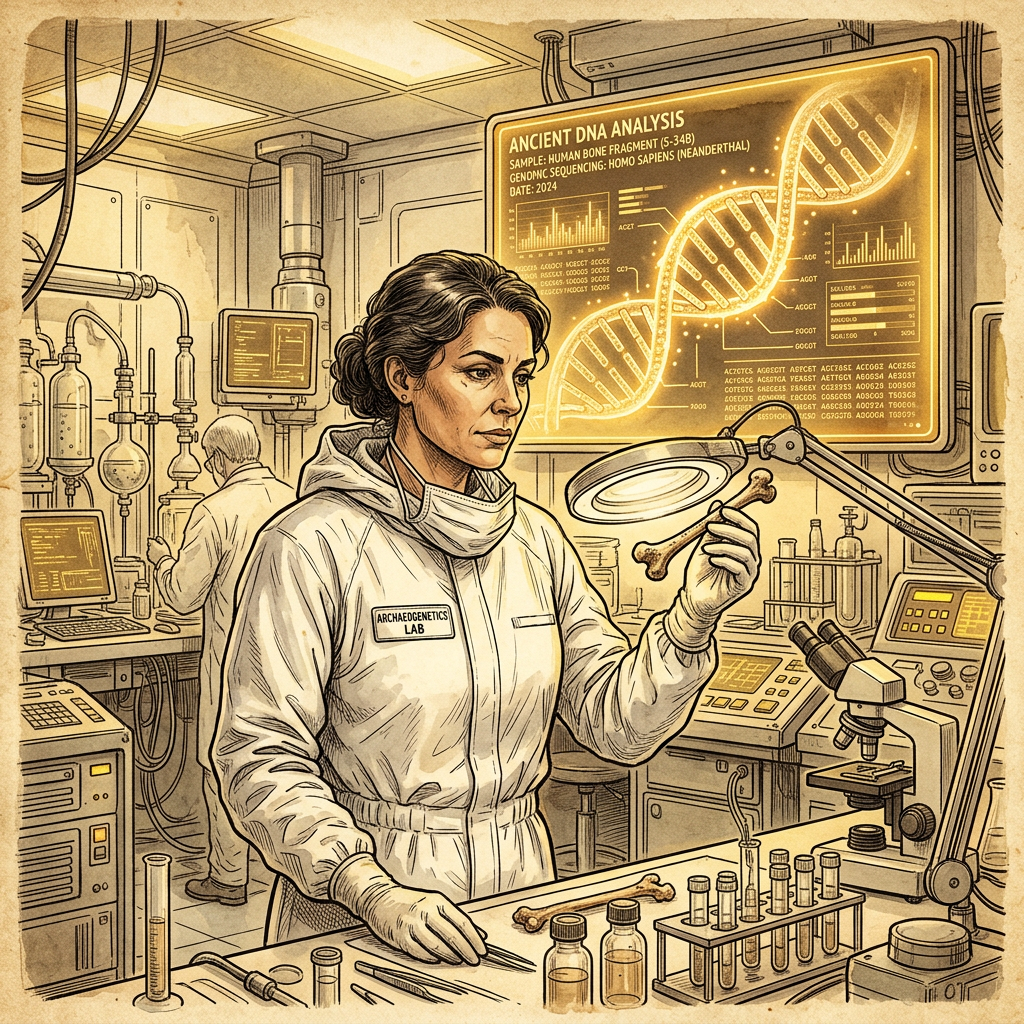
In a landmark paper appearing in Nature Communications, paleogenomicists have sequenced the DNA from Mesolithic hunter-gatherer remains discovered in the upper reaches of the Cauvery Basin. The study identifies a unique cluster of genes associated with resistance to waterborne pathogens, suggesting that early populations in Southern India had developed sophisticated biological adaptations to riverine ecosystems as early as 6,000 BCE.
The research also reveals a "ghost lineage" that contributed approximately 15% of the ancestry to these individuals, distinct from both the Ancient Ancestral South Indians (AASI) and later migrant groups. This finding suggests a more complex web of human evolution in the peninsula, where isolated pockets of foragers maintained genetic distinctness while successfully navigating the high-humidity environments of the Holocene.