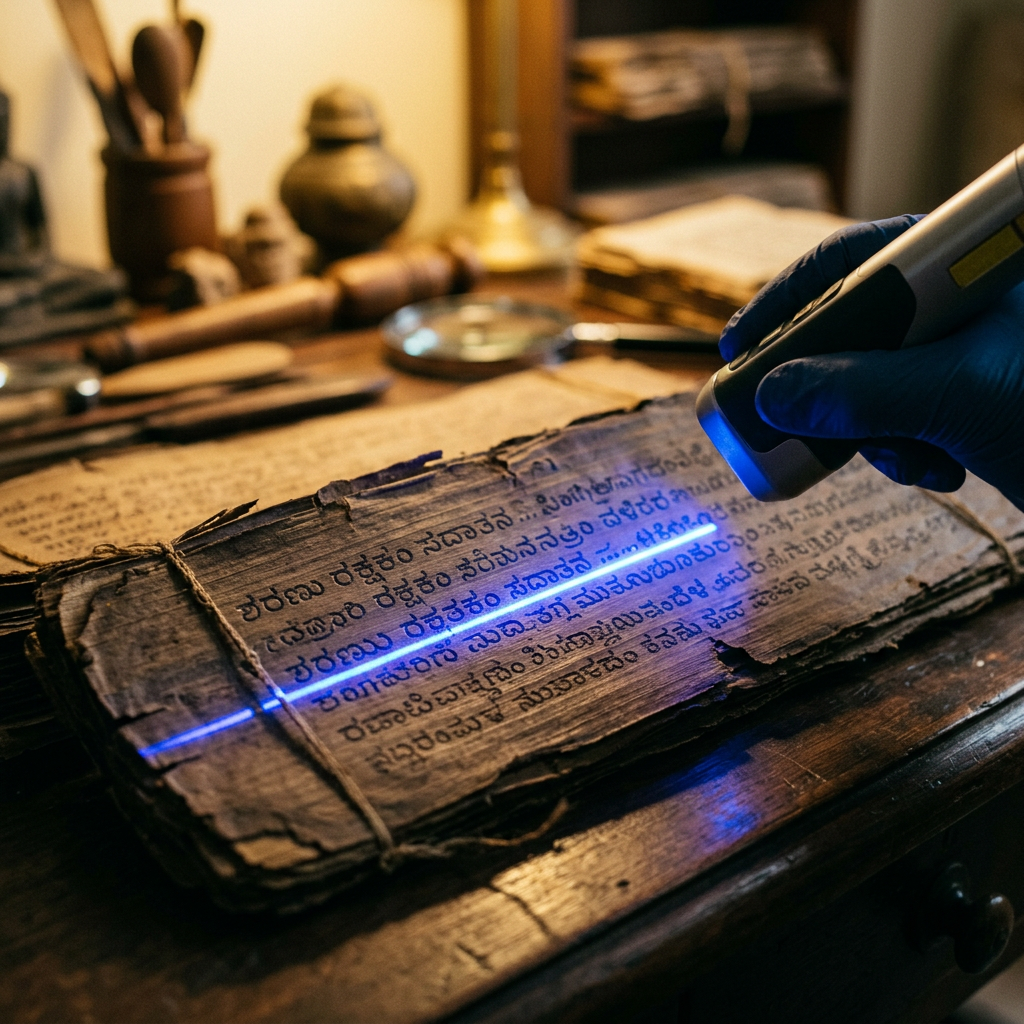
Researchers at the Global Digital Humanities Institute have successfully used a new neural network model to decipher a cache of fragmented Tulu-Brahmi palm-leaf manuscripts. The texts, recovered from a temple granary in coastal Karnataka, detail a sophisticated 8th-century system of Vrikshayurveda (botanical science) focused on "zero-waste" nutrient recycling in areca nut plantations.
The manuscript provides specific mathematical ratios for fermenting agricultural byproducts to create nitrogen-rich fertilizers, a practice the researchers describe as an early precursor to modern circular bio-economy principles. This discovery challenges the notion that intensive soil management was a purely modern invention, showing instead a highly codified tradition of ecological engineering in medieval India.