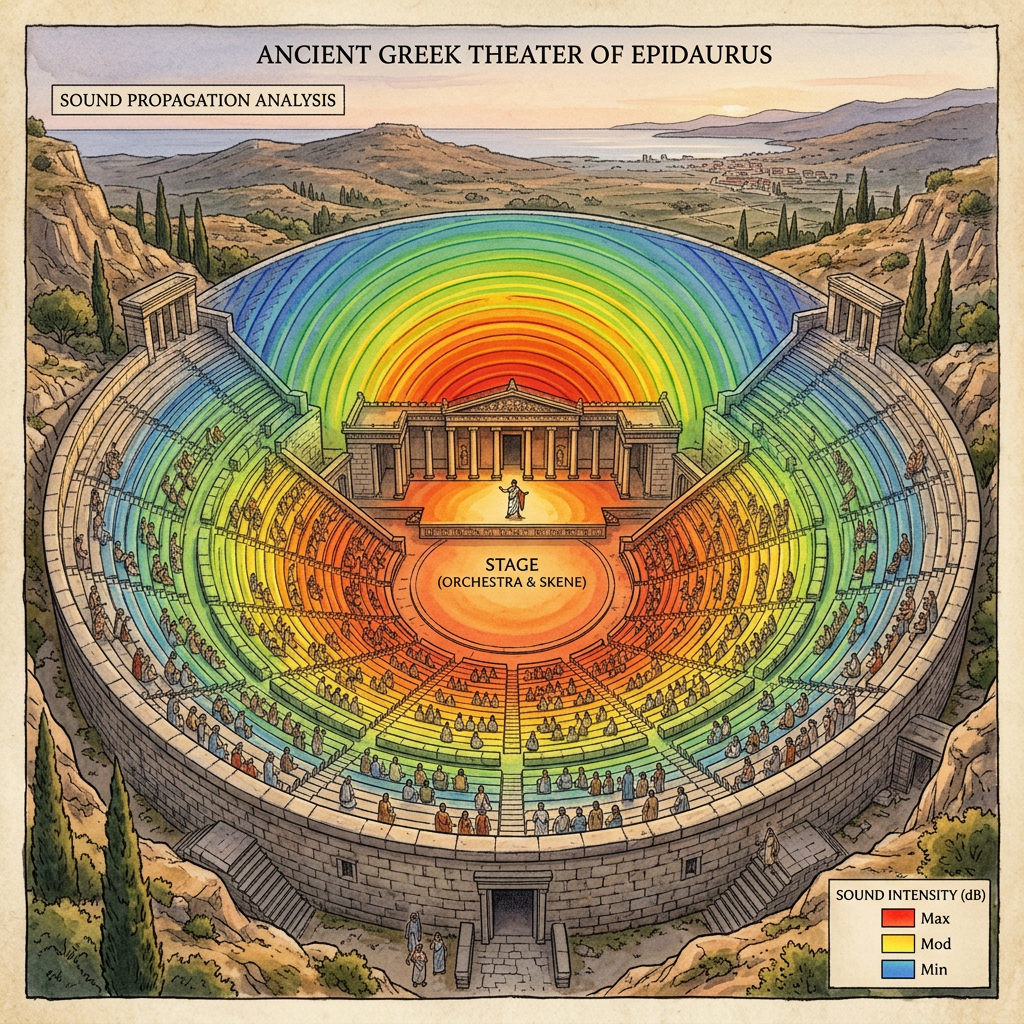
A new interdisciplinary study in Antiquity Journal has used multispectral imaging and acoustic modeling to analyze 7th-century inscriptions found in the ruins of an open-air theater in Odisha. The researchers found that the curvature of the stone walls, as described in the technical Sanskrit epigraphs on-site, was mathematically calculated to optimize sound wave diffraction.
The study proves that Kalingan architects used a specific geometric formula to ensure that the voice of a performer at the center would remain audible to over 2,000 spectators without echoing. This represents the earliest known physical evidence of applied wave physics in monumental architecture, demonstrating a sophisticated bridge between theoretical Sanskrit phonetics and practical engineering.