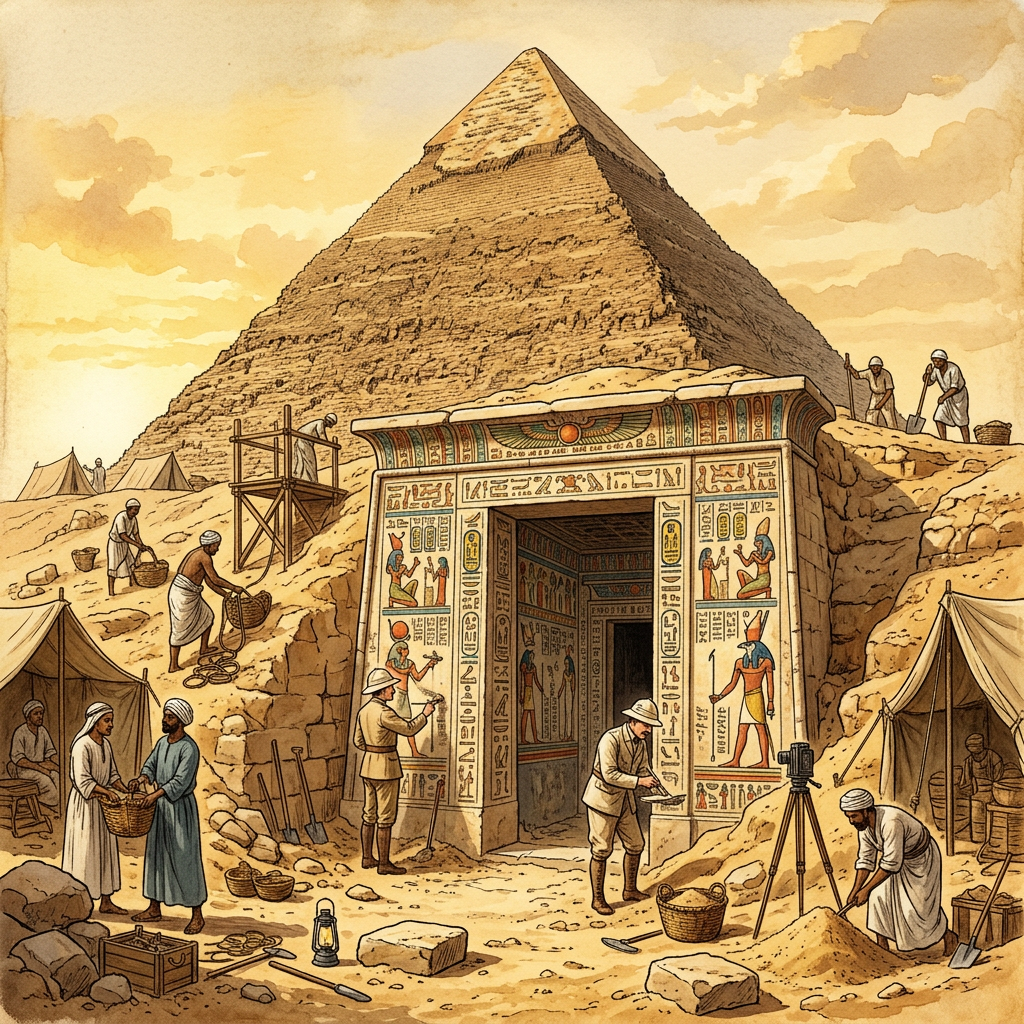
Archaeologists working in the Dahshur necropolis have uncovered an extraordinarily preserved funerary suite belonging to a previously unknown queen from the 13th Dynasty. The chamber, located within the mud-brick core of a collapsed pyramid structure, contains a red granite sarcophagus and a series of intact ritual items, including gold-leafed jars and a rare cedarwood statuette of the deceased. This discovery provides a rare glimpse into the Second Intermediate Period, a time of political fragmentation in ancient Egypt where royal burial traditions were undergoing significant shifts.
Preliminary analysis of the hieroglyphs suggests the queen held the title of 'Mother of the King,' potentially linking her to a lineage of pharaohs who sought to emulate the grand architecture of the Middle Kingdom. The excavation also revealed a hidden annex containing over 200 ceramic vessels used in funerary offerings, which were found in their original placement, untouched for nearly 3,700 years. Scholars believe this find will help clarify the genealogy of the obscure 13th Dynasty and provide critical data on the engineering techniques used to reinforce early mud-brick pyramids.