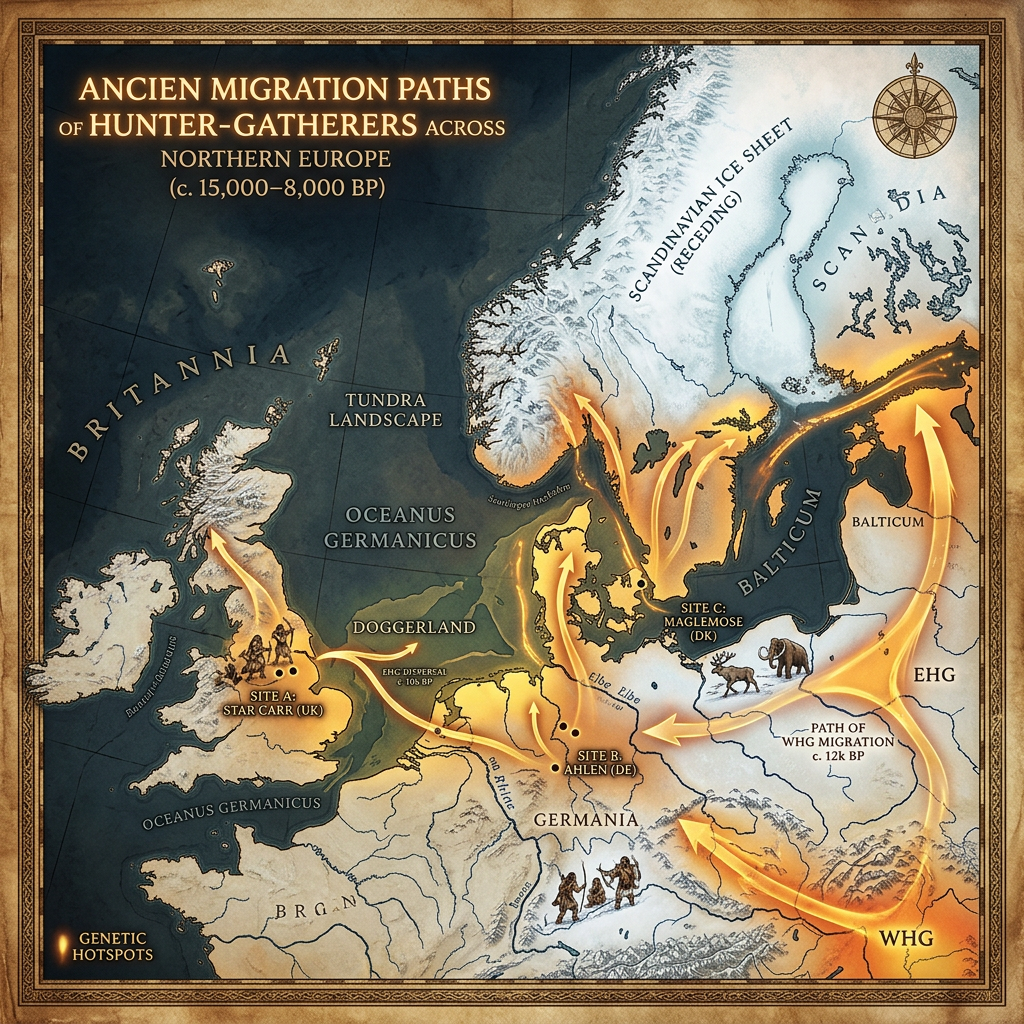
A large-scale genetic study featured in Current Biology has mapped the genomes of the Kunda culture inhabitants who occupied the Baltic region during the early Holocene. The research identifies a specific cluster of genetic variants related to lipid metabolism and thermogenesis, suggesting these foragers had already developed high-altitude and extreme-cold physiological adaptations.
The study reveals a unique genetic signature that distinguishes these hunter-gatherers from their southern neighbors, indicating a long-term isolation in the periglacial environments of Northern Europe. These findings provide critical insights into how ancient populations biologically adapted to the rapidly shifting climates of the post-Ice Age world.