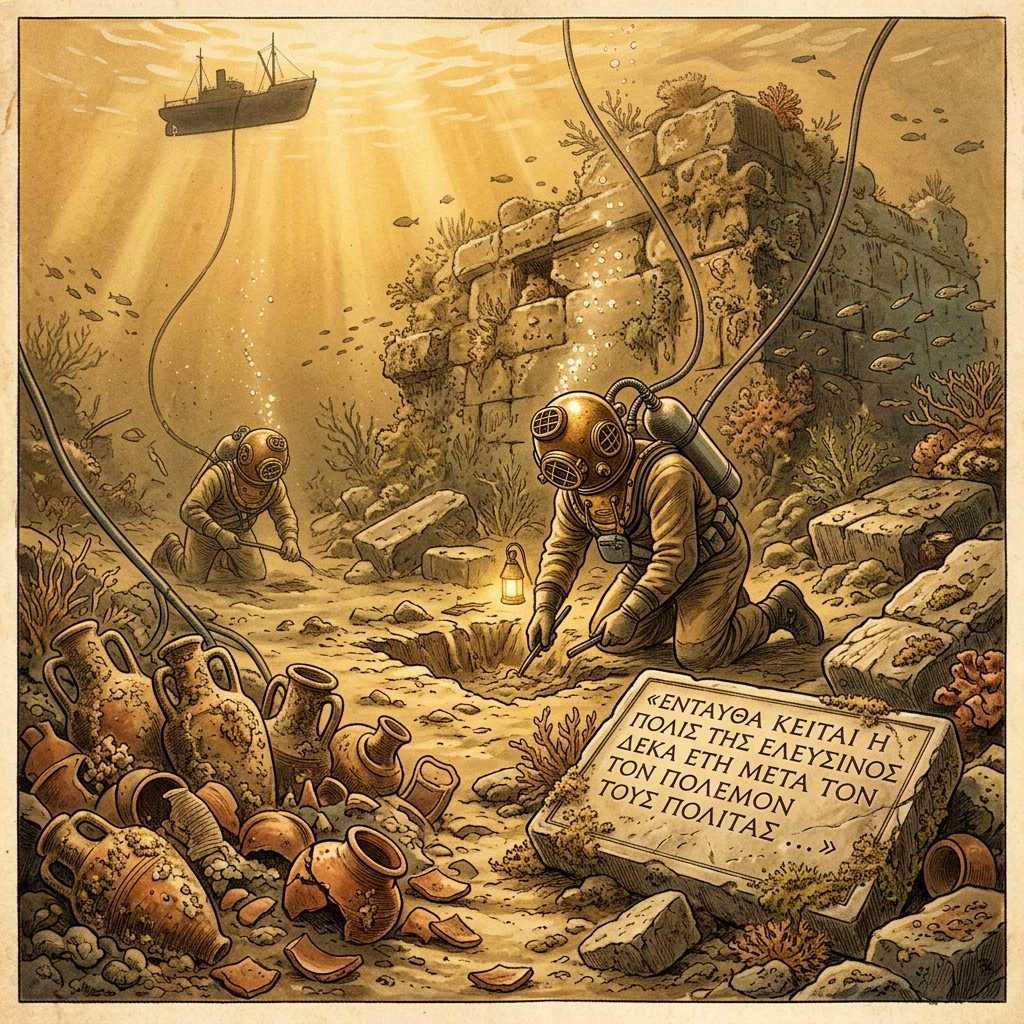
Submerged beneath the waters of the Taman Bay, an expedition at the ancient Greek colony of Phanagoria has located the ruins of a 5th-century BCE Customs House. The structure, which sits six meters underwater due to rising sea levels, served as the primary administrative checkpoint for vessels entering the Bosporan Kingdom. Among the ruins, divers recovered a series of inscribed lead tablets that acted as a maritime trade ledger, recording the taxes paid on shipments of Attic pottery, Aegean wine, and local grain.
The find is a treasure trove for economic historians, as it lists specific ship names and their ports of origin, detailing a trade network that stretched as far as Carthage and Marseille. The customs house itself was built using massive limestone blocks and featured an integrated pier system that allowed for the direct inspection of cargo. This discovery provides the most comprehensive look yet at how ancient Greek colonies regulated their Black Sea trade and integrated into the broader Mediterranean economy during the Classical period.