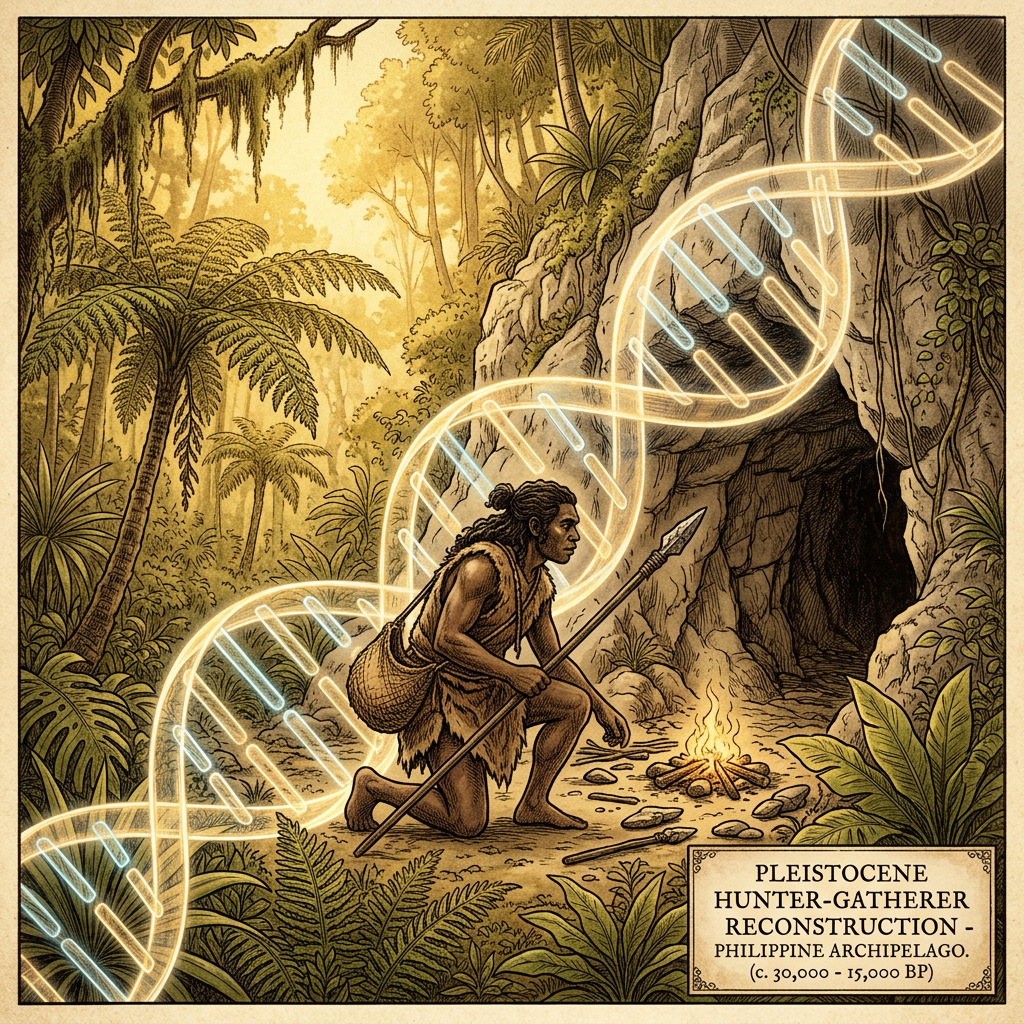
A breakthrough paleogenomic study published in Nature Ecology & Evolution has revealed the existence of a previously unknown human lineage that inhabited the Philippine archipelago during the late Pleistocene. By sequencing the DNA of 11,000-year-old skeletal remains found on the island of Mindoro, researchers have identified a genetic signature that predates the arrival of Austronesian-speaking farmers by several millennia.
The study indicates that these ancient foragers remained genetically isolated for a significant period, developing unique adaptations to the island’s tropical rainforest ecosystem. This discovery challenges existing models of migration in Southeast Asia, suggesting that the region was a mosaic of diverse, localized populations rather than a simple transit route for larger migratory waves. Genetic markers for resistance to endemic tropical pathogens were also identified, providing a rare glimpse into early human evolutionary biology in the Pacific.