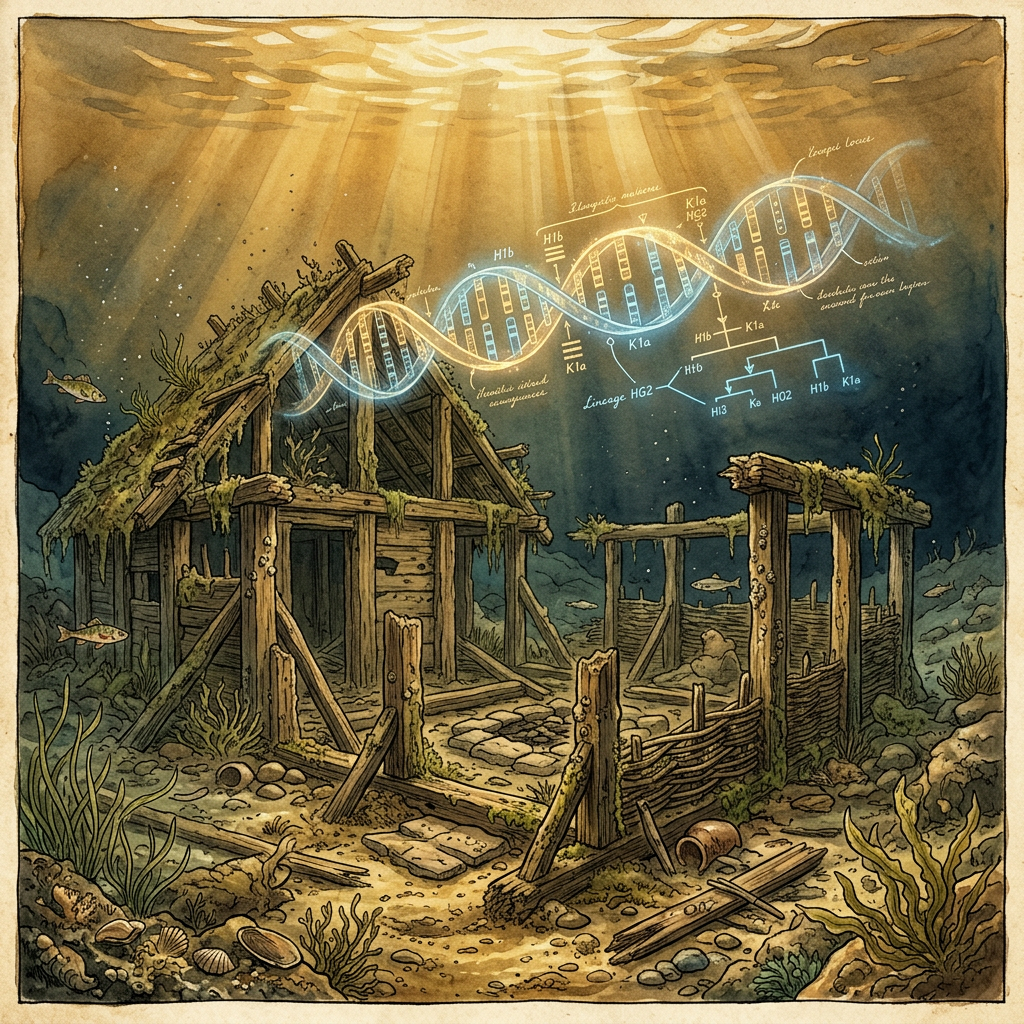
An international team of geneticists has completed the first comprehensive DNA analysis of human remains recovered from Doggerland, the submerged landmass that once connected Britain to mainland Europe. The study, appearing in Science Advances, examines the genomes of three individuals whose remains were dredged from the North Sea floor. The results reveal a surprising degree of genetic continuity among these 'lost' foragers, even as rising sea levels began to fragment their territory.
The data suggests that the Doggerland populations were not merely transient but had established a resilient, long-term genetic lineage that resisted significant admixture from neighboring groups for over 2,000 years. Isotope analysis of their teeth further indicates a diet heavily reliant on marine resources, supporting the theory that these groups were highly specialized coastal navigators. This research provides a critical baseline for understanding how early Europeans adapted to the catastrophic climate change of the early Holocene.