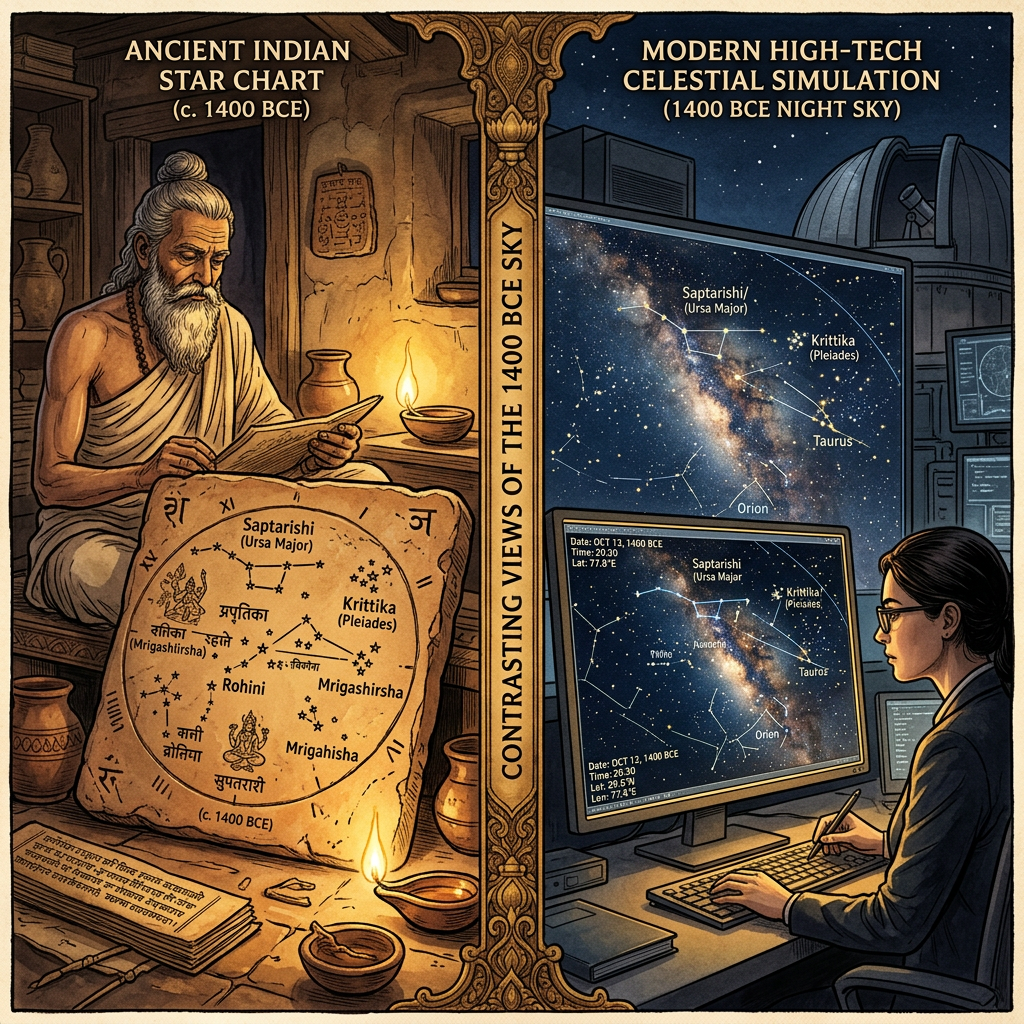
New research published in Archeoastronomy and Ancient Technologies has applied modern computational models to the celestial coordinates found in the Vedanga Jyotisha, attributed to the sage Lagadha. The study concludes that the observational data recorded in the text aligns with the night sky as it appeared around 1400 BCE, specifically tracking the precession of the equinoxes with remarkable accuracy for the period.
The research team utilized star-mapping software to simulate the positions of the Nakshatras (lunar mansions) mentioned in the verses. Their findings demonstrate that ancient Indian astronomers had developed a sophisticated empirical system for tracking solar and lunar cycles to regulate seasonal rituals. This study provides firm scientific evidence for a highly developed observational tradition in India that predates Hellenistic influence by more than a thousand years.