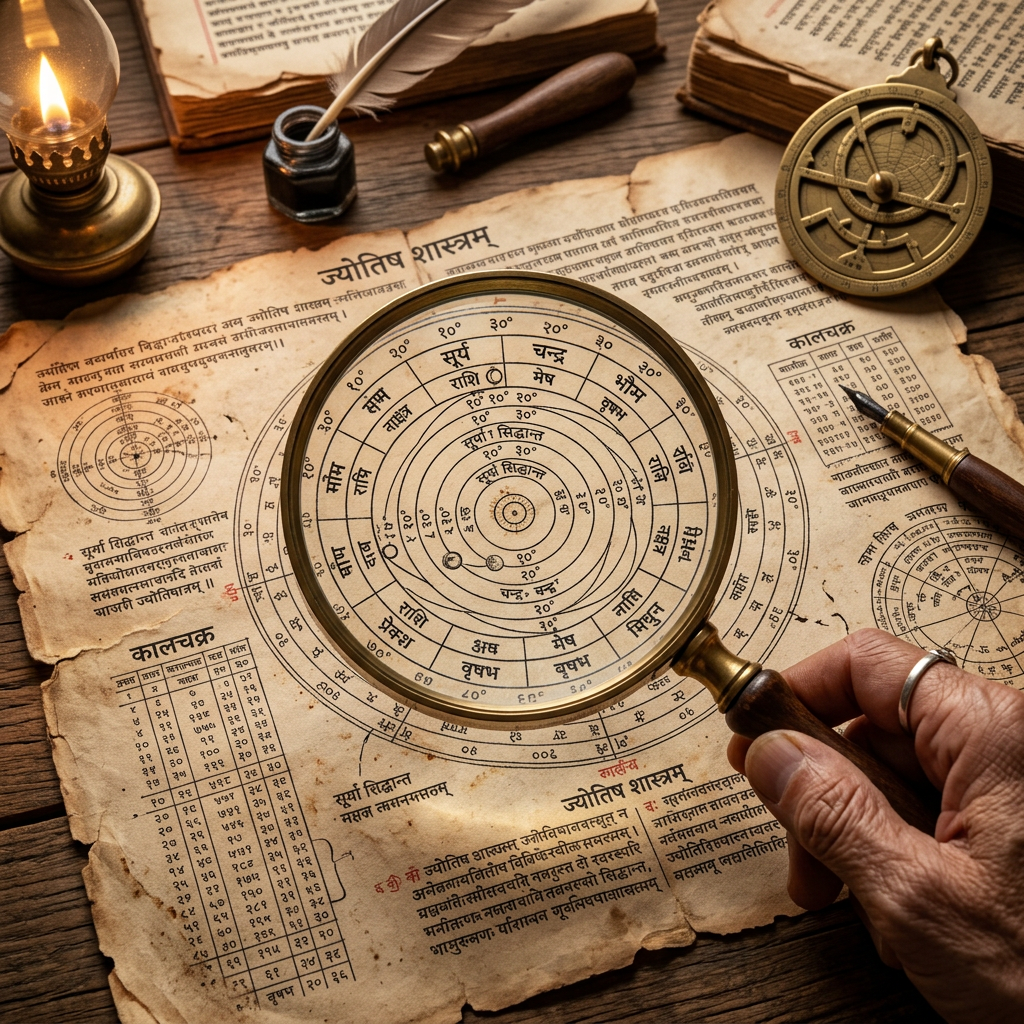
A breakthrough research paper published in the Journal of Astronomical History and Heritage has provided a detailed mathematical analysis of the Paitamaha Siddhanta, one of the five ancient systems of Indian astronomy. The study reveals that the text contains highly sophisticated tables for calculating solar parallax and the duration of day and night with an accuracy that matches or exceeds contemporary Hellenistic models. Researchers argue that these tables suggest a robust, independent observational tradition in the Indian subcontinent that predates the influence of Ptolemaic astronomy.
By applying computational retrodiction, the research team demonstrated that the parameters used in the Paitamaha Siddhanta were derived from a series of systematic observations conducted over several centuries. This challenges the long-held academic view that early Indian astronomical systems were purely derivative, pointing instead to a complex synthesis of indigenous methods and local star catalogs that facilitated advanced planetary tracking long before the medieval era.