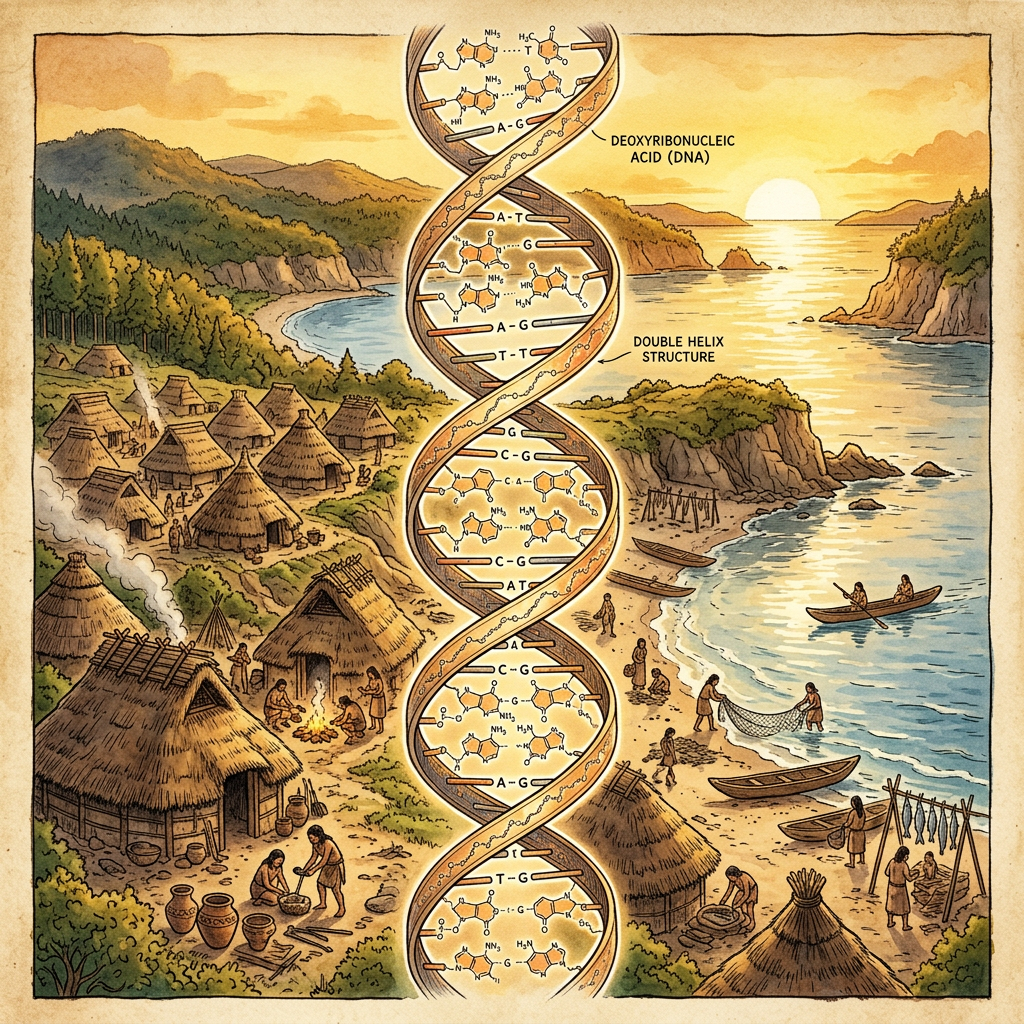
In a major development for paleogenomics, a study published in Nature Genetics has analyzed the DNA of individuals found at a Neolithic site in Chiba, Japan. The findings reveal a previously unknown genetic signature that suggests a 'third pulse' of migration into the Japanese archipelago during the early Jomon period. This new lineage is distinct from both the indigenous hunter-gatherers and the later Yayoi farmers, indicating that the prehistoric population of Japan was far more diverse than previously modeled.
The research, led by an international consortium of anthropological geneticists, suggests that this specific population arrived via a northern maritime route, bringing with them unique cultural practices and tool-making technologies. This genetic breakthrough provides a new framework for understanding the complex demographic shifts in East Asia and highlights the role of the North Pacific coastline as a major highway for early human dispersal.