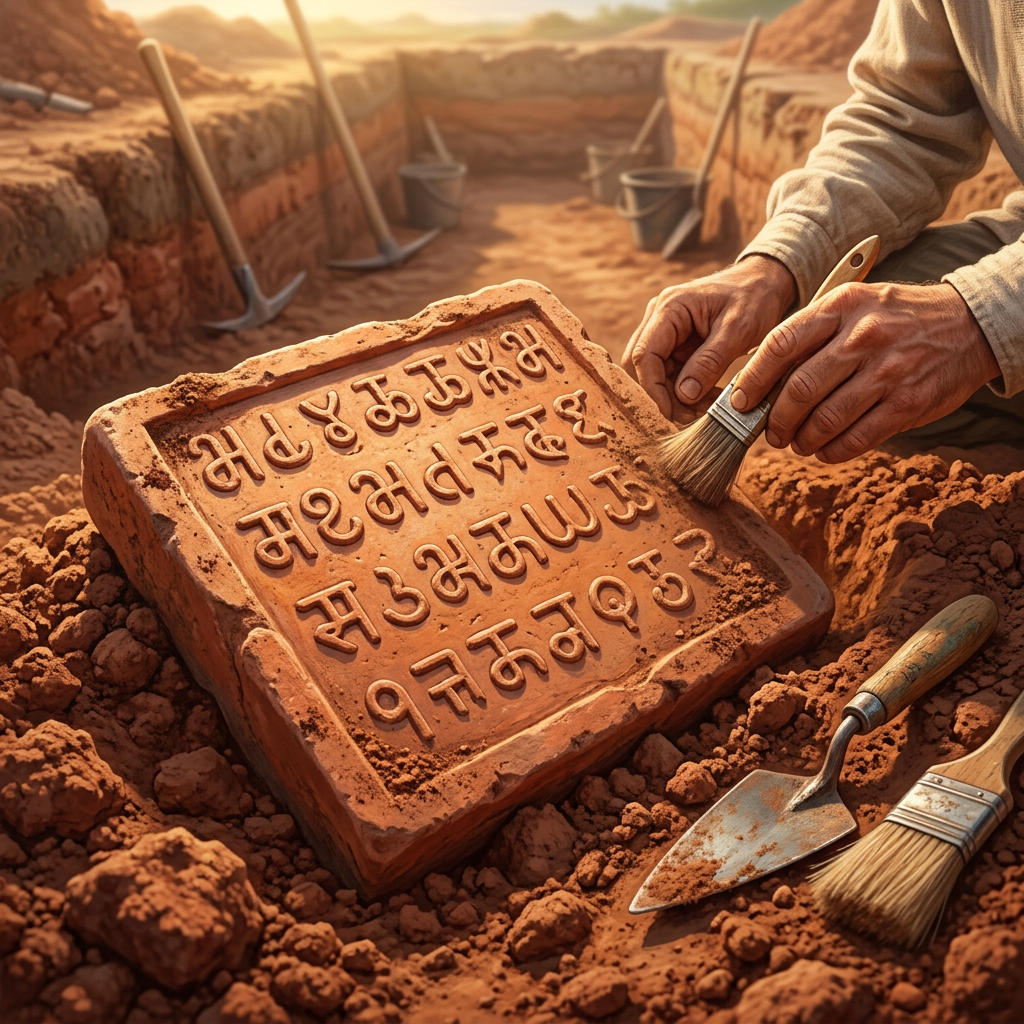
During recent excavations at the ancient city of Ahichchhatra in Uttar Pradesh, archaeologists unearthed a cache of terracotta tablets inscribed with early Gupta-era Brahmi script. Unlike typical administrative records, these tablets contain a series of aphorisms regarding Karma-Yoga and the 'Ethics of the Sovereign.' The inscriptions detail the philosophical justification for the King’s duty to maintain Dharma through social welfare rather than just conquest.
Scholars believe these tablets served as educational materials for a local academy, highlighting the practical application of the Bhagavad Gita's philosophy in 4th-century governance. One tablet specifically discusses the 'Equanimity of the Actor,' suggesting that the philosophical concept of Nishkama Karma (selfless action) was a cornerstone of public life during the Golden Age of India.