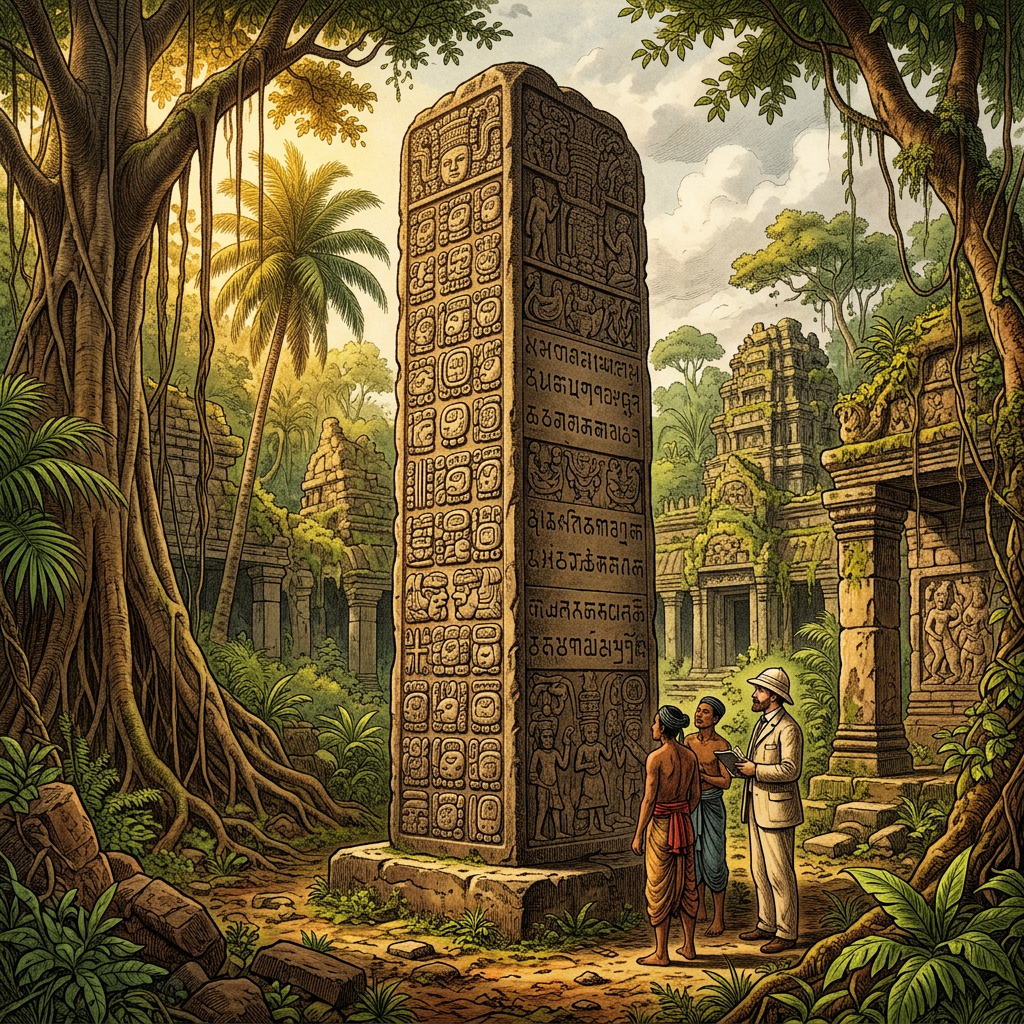
Archaeologists in Cambodia have identified a dual-language stele at the Sambor Prei Kuk complex that outlines a unique Philosophy of Sacred Geography. The 7th-century inscription describes the layout of the city as a physical manifestation of the Vastu-Purusha Mandala, where the urban structure serves as a medium for the residents to achieve spiritual alignment with the cosmos.
The Sanskrit portion of the text discusses the 'immanence of the divine in stone and mortar,' suggesting that ancient Khmer architects viewed city-building as a philosophical act. This discovery clarifies the ideological link between Indian Agamic traditions and the monumental architecture of Southeast Asia.