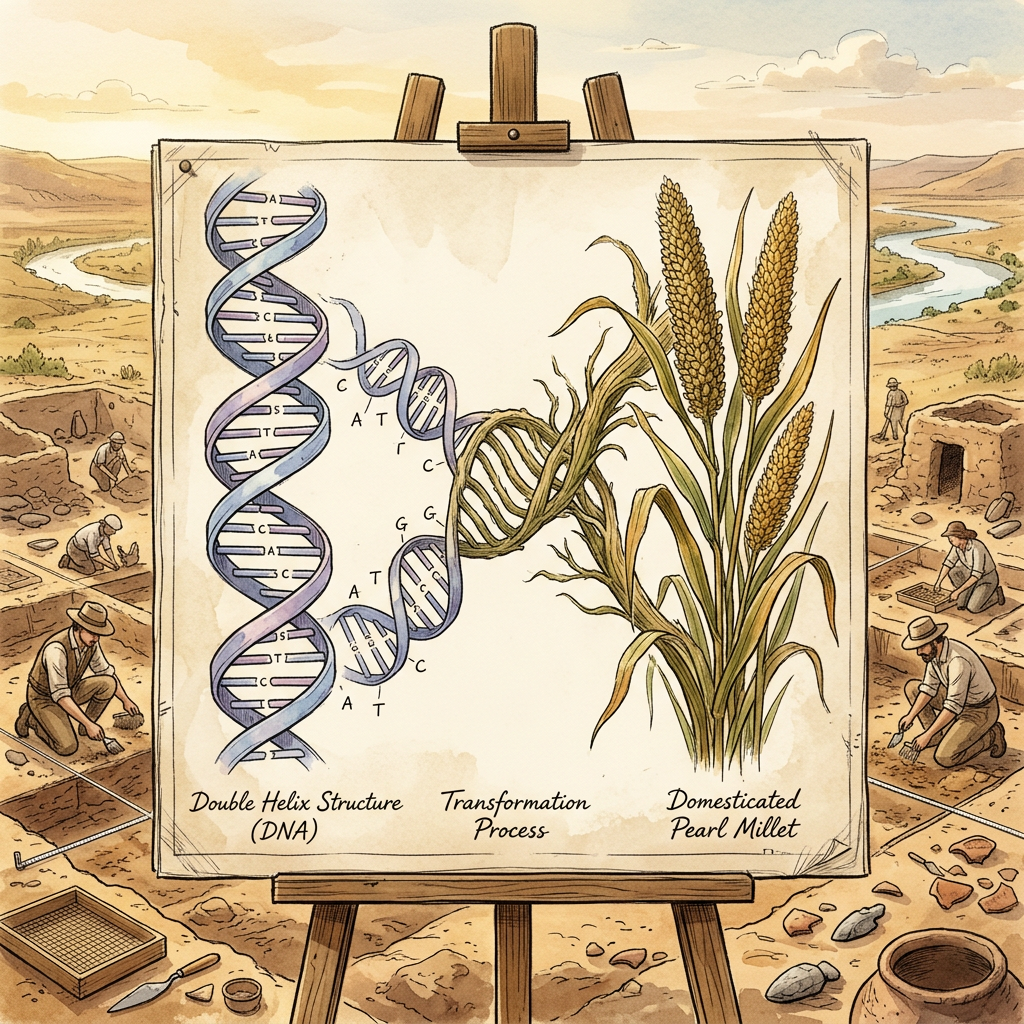
A large-scale genomic study of human remains found in the Tapi River Valley has provided the first definitive genetic evidence of a unique Neolithic transition in Central India. Analysis of skeletal remains dating back 6,000 years reveals a population that developed specific genetic markers for monsoon resilience, allowing them to maintain settled agricultural practices despite significant climatic fluctuations during the mid-Holocene.
The research, published in Nature Communications, indicates that these ancient communities were genetically distinct from the early farmers of the Indus Valley. Instead, they represent a localized adaptation of hunter-gatherer lineages that successfully domesticated local species of millets and legumes. This finding challenges the 'diffusionist' model of agriculture, suggesting that the Neolithic transition in India occurred through multiple, independent pulses across different river basins.