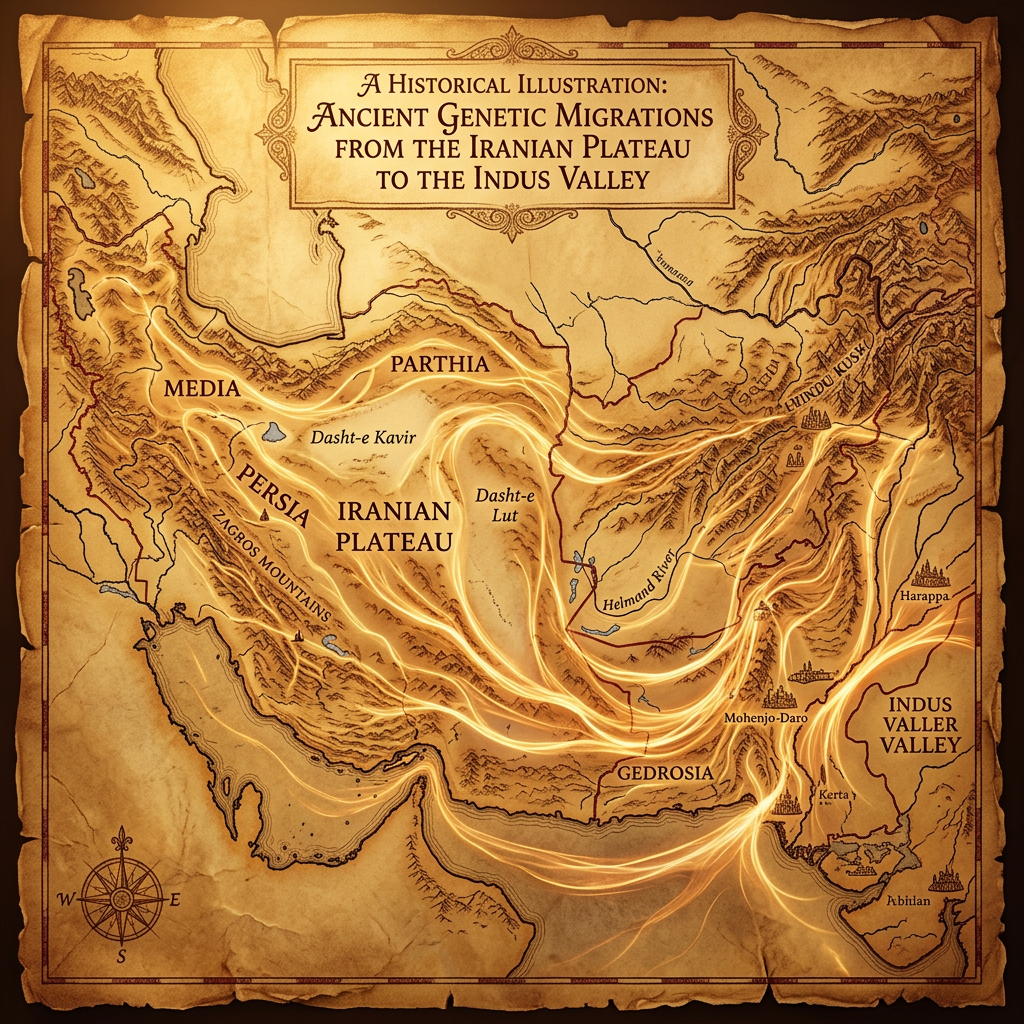
Scientists have sequenced the oldest known human genome from the Kavir Range in the central Iranian plateau, dating to approximately 8,500 years ago. The results, published in Cell Reports, identify a 'ghost' lineage that diverged from the early farmers of the Zagros Mountains much earlier than expected. This group represents a distinct genetic cluster that likely thrived in the arid basins of central Iran before the full-scale expansion of Neolithic farming societies.
The study further reveals that these individuals possessed unique alleles related to sodium metabolism and water retention, indicating a long-term evolutionary adaptation to desert environments. This research provides a critical missing link in our understanding of how early human populations partitioned the landscape of the Near East and how these genetic legacies influenced later Bronze Age migrations into South Asia and surrounding regions.