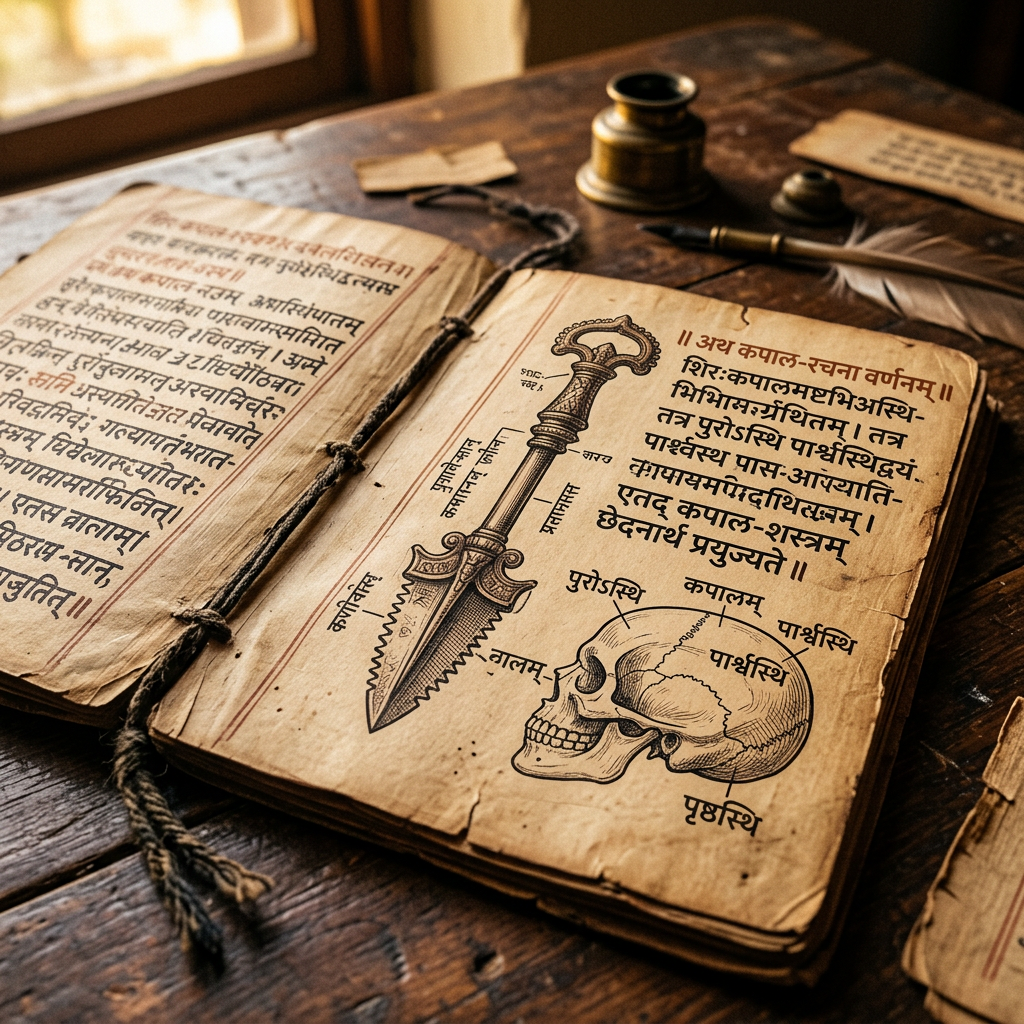
A team of Sanskrit scholars and neurosurgeons has identified a rare 6th-century commentary on the Sushruta Samhita within the archives of a remote Tibetan monastery. This previously unknown manuscript contains detailed illustrations and descriptions of neuro-surgical procedures, including techniques for relieving cranial pressure and the specific use of herbal anesthetics to stabilize patients during surgery.
The text is significant because it bridges the gap between early classical Ayurvedic texts and their later medieval adaptations. It provides the first documented evidence of specialized surgical instruments designed specifically for delicate procedures on the skull. The researchers emphasize that the manuscript reflects a highly developed medical tradition that integrated anatomical knowledge with advanced pharmacology, preserved through the trans-Himalayan exchange between Indian and Tibetan scholars.