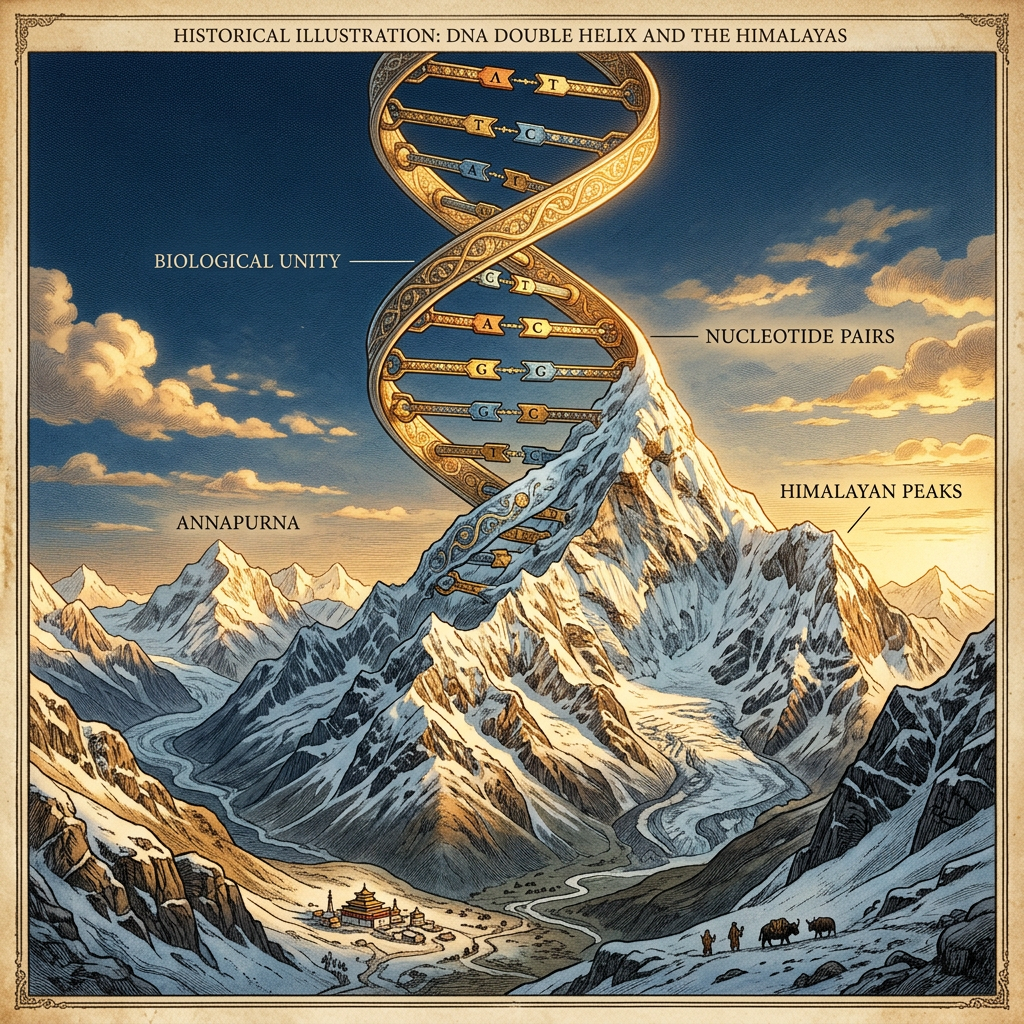
A landmark paleogenomics study published in Nature Genetics has analyzed the remains of individuals discovered in high-altitude caves in the Gokyo region, dating back over 8,000 years. The research identifies a unique genetic variant in the EPAS1 gene, which facilitates survival in low-oxygen environments, providing the earliest direct evidence of human adaptation to the extreme conditions of the Tibetan Plateau and the Himalayas.
The study suggests that this genetic adaptation was already prevalent in these ancient populations, indicating a much deeper history of high-altitude residency than previously hypothesized. This breakthrough methodology involved extracting high-coverage DNA from petrous bone fragments, allowing researchers to trace the movement of these early highlanders and their interactions with lowland populations during the early Holocene.