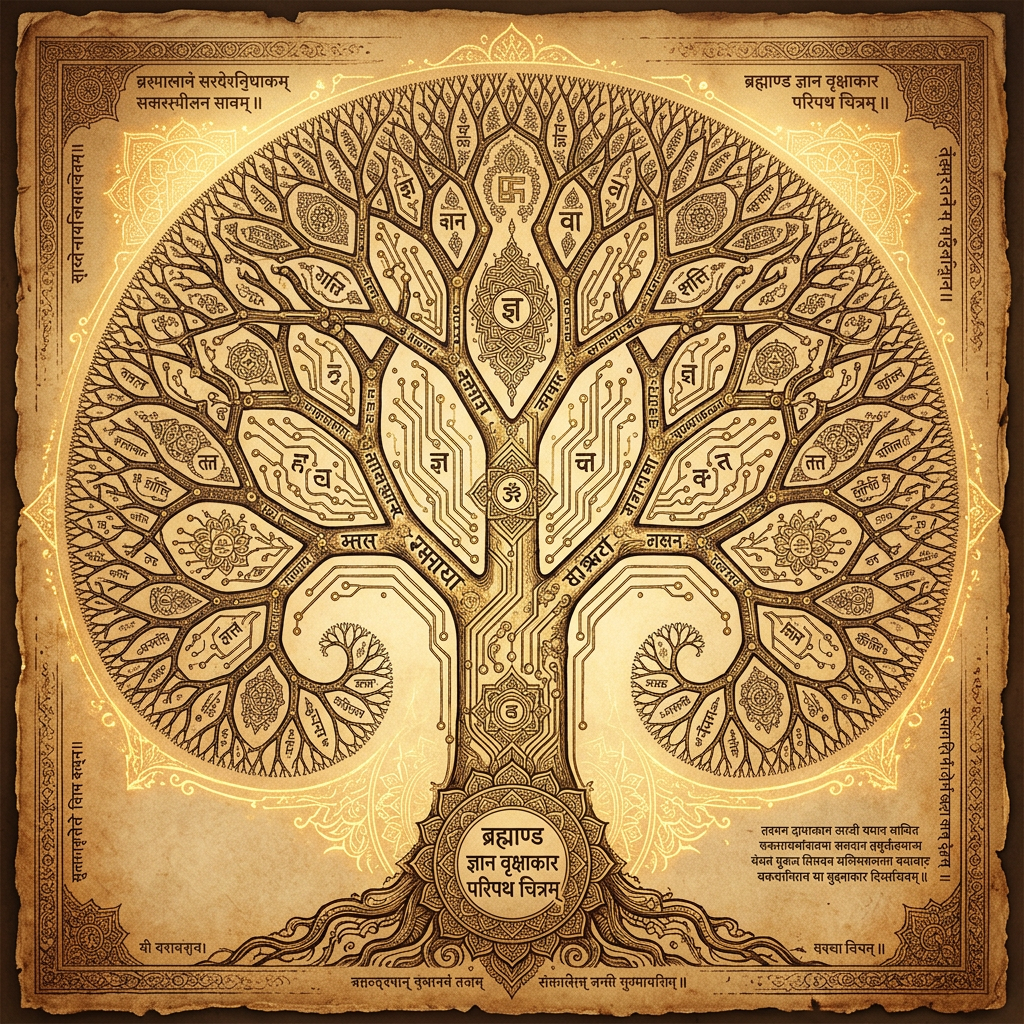
A new study in the Journal of Indian Philosophy and Science has utilized computational modeling to analyze the structure of the Chandaḥśāstra by Pingala. The research demonstrates that the text's system for mapping poetic meters is the world's earliest recorded use of recursive combinatorial algorithms, predating similar concepts in European mathematics by over a millennium.
The study proves that Pingala used a binary representation of long and short syllables to generate all possible rhythmic patterns, a technique that essentially mirrors the logic of modern computer programming. This mathematical analysis provides a bridge between ancient linguistics and the foundation of computational theory.