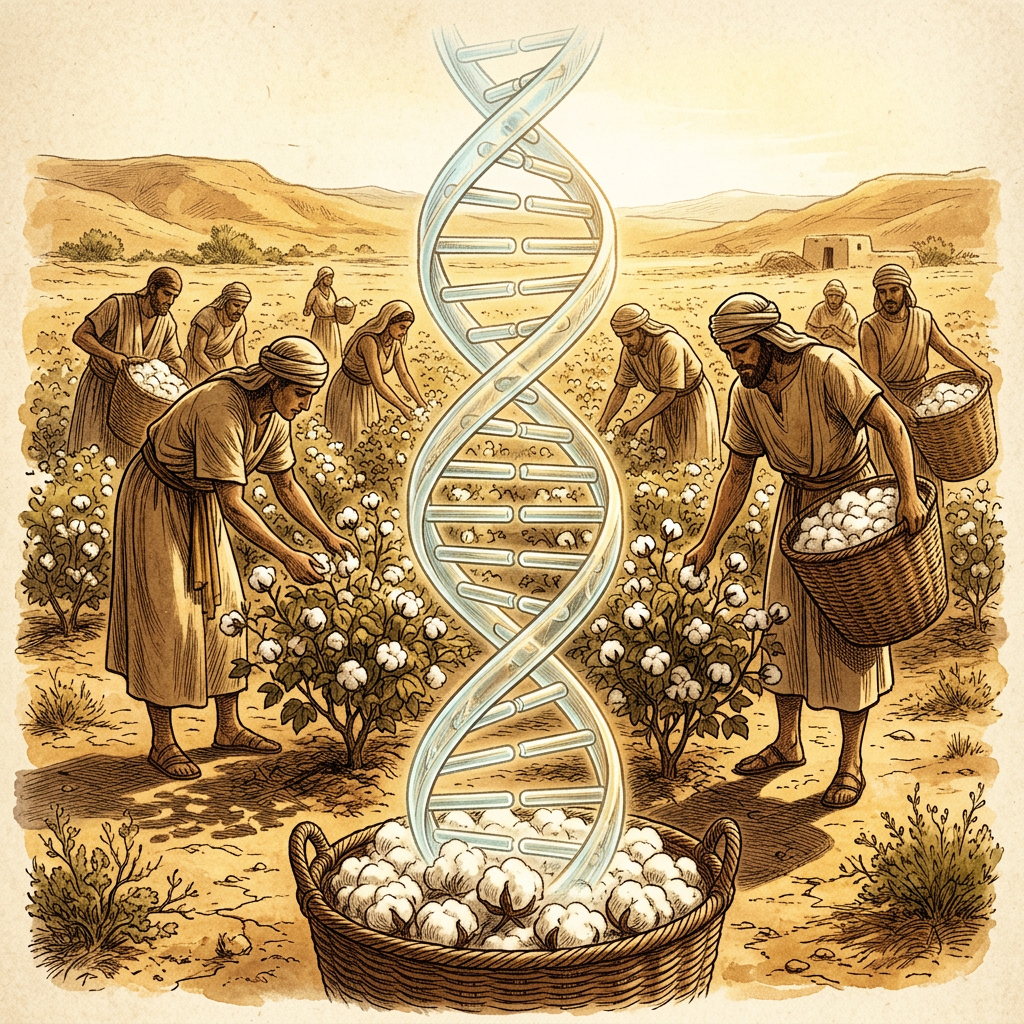
A comprehensive genomic study of remains from the Ahar-Banas culture has revealed the earliest known genetic signatures associated with a population specializing in large-scale cotton cultivation and textile production. The research, published in Current Biology, indicates that these early farmers possessed specific genetic markers linked to high-protein diets and physical resilience to semi-arid labor.
By comparing the DNA with modern populations in Rajasthan and Gujarat, researchers have identified a high degree of genetic continuity, suggesting that the technological and agricultural innovations of the Ahar-Banas culture were passed down through local lineages rather than through large-scale replacement. This finding redefines our understanding of the social complexity of Chalcolithic India.