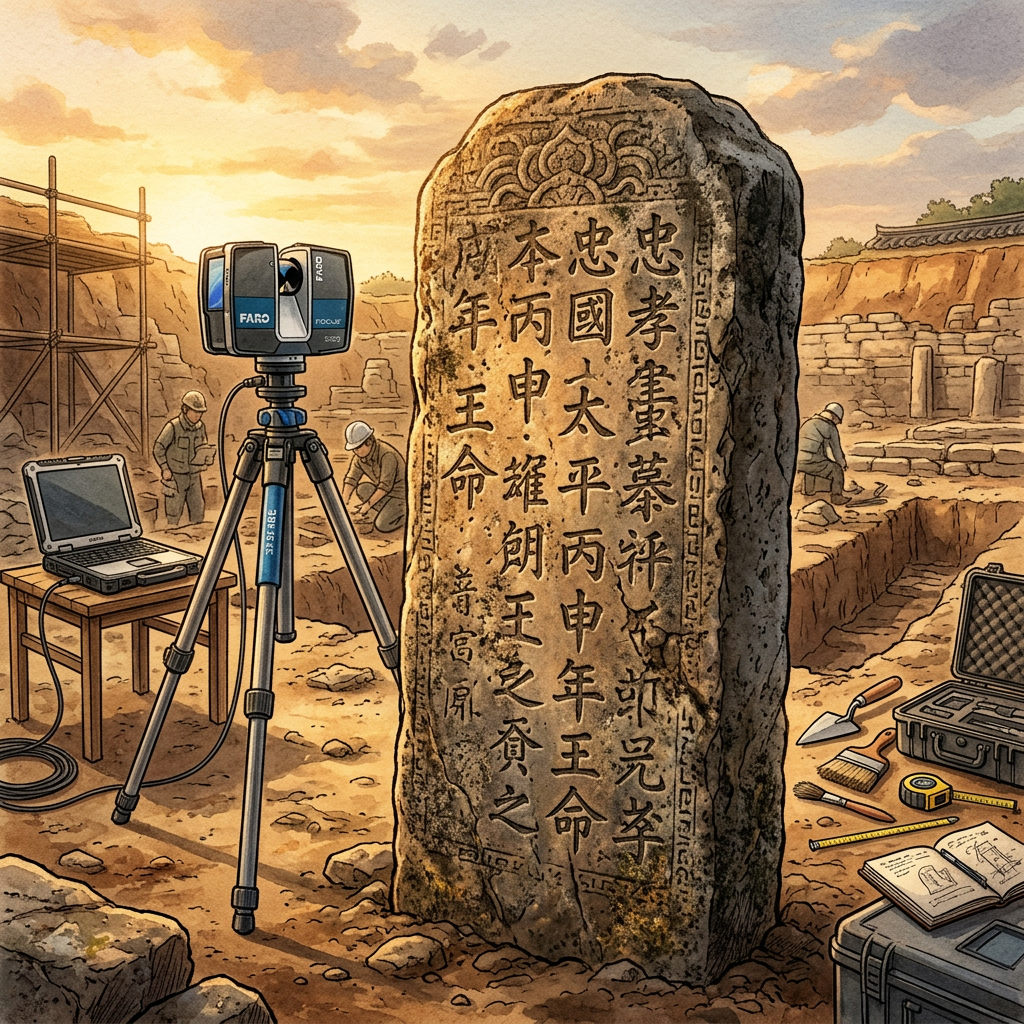
Archaeologists at the Gyeongju National Museum have successfully matched two fragments of a Silla-era stele discovered 83 years apart, restoring critical inscriptions that shed light on ancient ritual practices. The most recent fragment, unearthed at the Wolseong Palace Site, was confirmed on April 13, 2026, to be part of a monument first identified in 1937.
The restored text includes characters such as gong (offering), providing direct evidence of the ceremonial activities and ritual offerings commissioned by the Silla royalty. Researchers suggest the stele's unique clerical script reflects stylistic influences from the neighboring Goguryeo kingdom, offering new insights into the political and religious connectivity of the 5th-century Korean Peninsula.