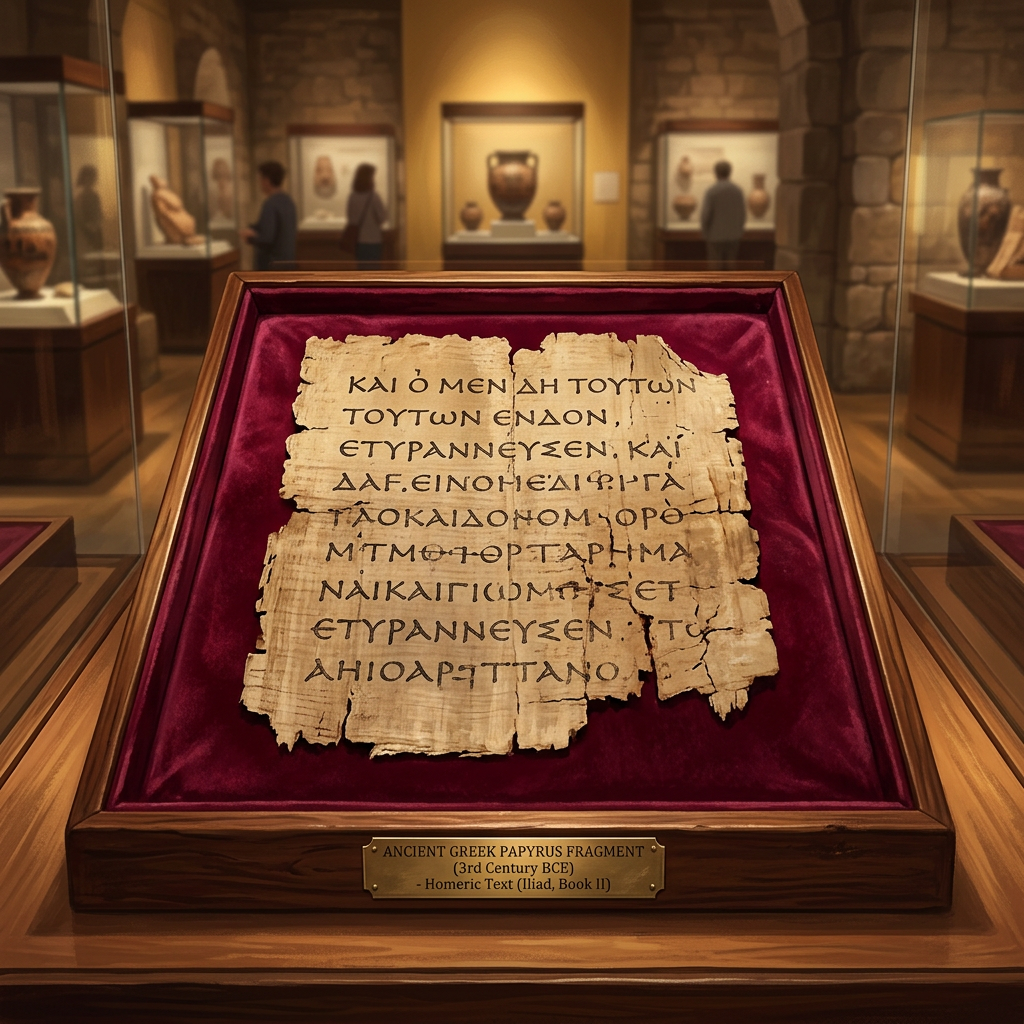
A sensational find in the underground cities of Cappadocia, Turkey, has brought to light a 3rd-century CE Greek papyrus scroll that specifically references the 'Indian Concept of Atman' (the self). The document appears to be a letter or a short philosophical essay written by a travelling merchant or a scholar who had visited the Taxila region. It attempts to explain the Vedantic idea of the soul to a Neoplatonist audience in the Roman Empire.
The text uses Greek philosophical terminology to describe the 'unchanging nature of the self' and compares it to the Platonic idea of the 'Good.' This scroll provides rare, direct evidence of the sophisticated intellectual exchange occurring along the Silk Road, proving that Vedic metaphysical concepts were being actively discussed and translated in the Mediterranean world centuries earlier than once thought. The manuscript is currently being housed in the Museum of Anatolian Civilizations for further preservation.