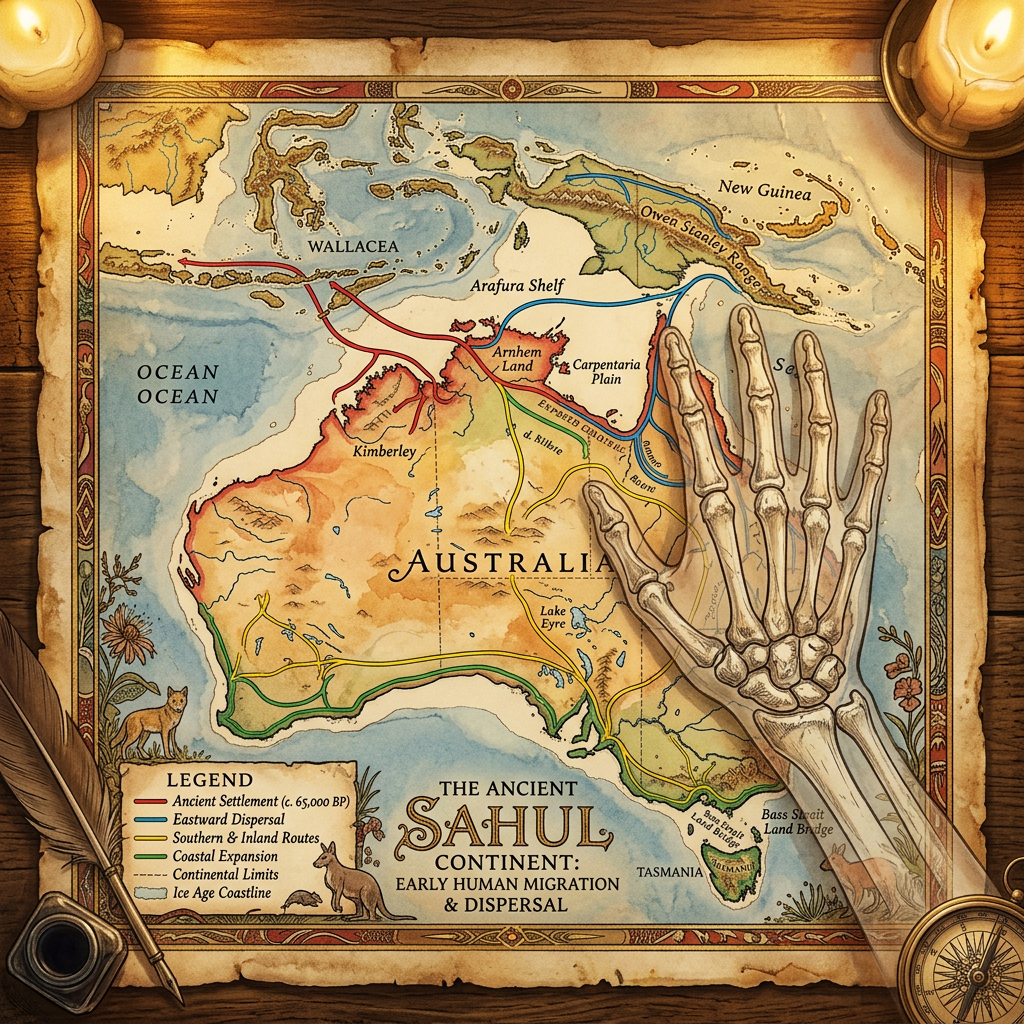
An international consortium has published a landmark study in Genome Research International detailing the genomic history of the Sahul continent (the landmass that once joined Australia and New Guinea). By sequencing the genomes of 12 individuals dating back to the early Holocene, the study identifies a profound genetic split that occurred exactly 10,000 years ago as sea levels rose.
The data reveals that coastal populations developed specific genetic markers associated with maritime endurance and hyper-saline diets, while inland groups maintained ancestral lineages. This paleogenomic mapping provides the most detailed timeline yet of how geography shaped the cultural and biological evolution of the First Australians and New Guineans following the end of the last Ice Age.