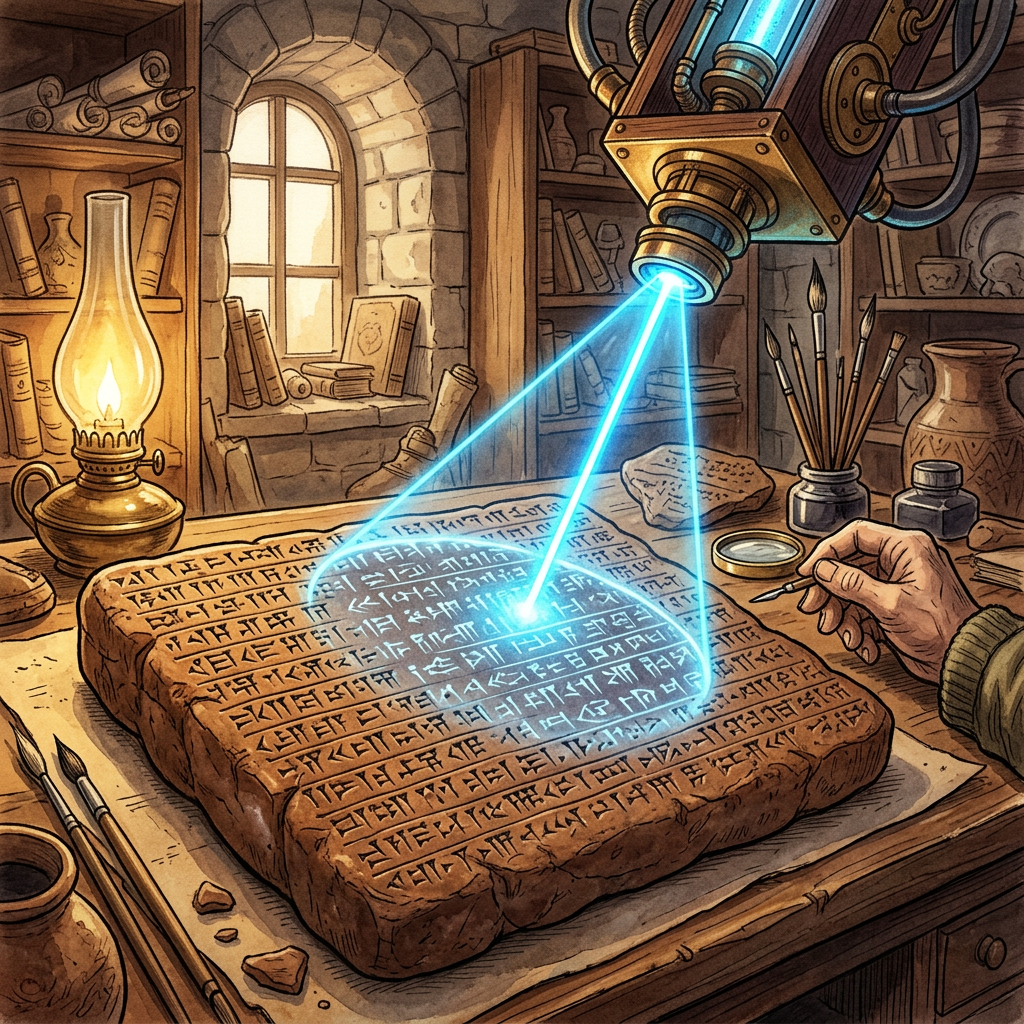
A new research paper in the Archaeological Science Quarterly describes the use of non-invasive Argon-Plasma etching to read 'palimpsest' clay tablets. In ancient Mesopotamia, tablets were often smoothed over and reused, effectively burying older texts. This new methodology allows researchers to visualize the density differences in the clay caused by the original stylus impressions.
Initial applications of this technology on tablets from Hattusa have revealed lost administrative records from the 13th century BCE hidden beneath a 7th-century BCE layer. This technological leap opens up the possibility of recovering thousands of 'erased' texts from across the ancient Near East without damaging the physical artifacts.