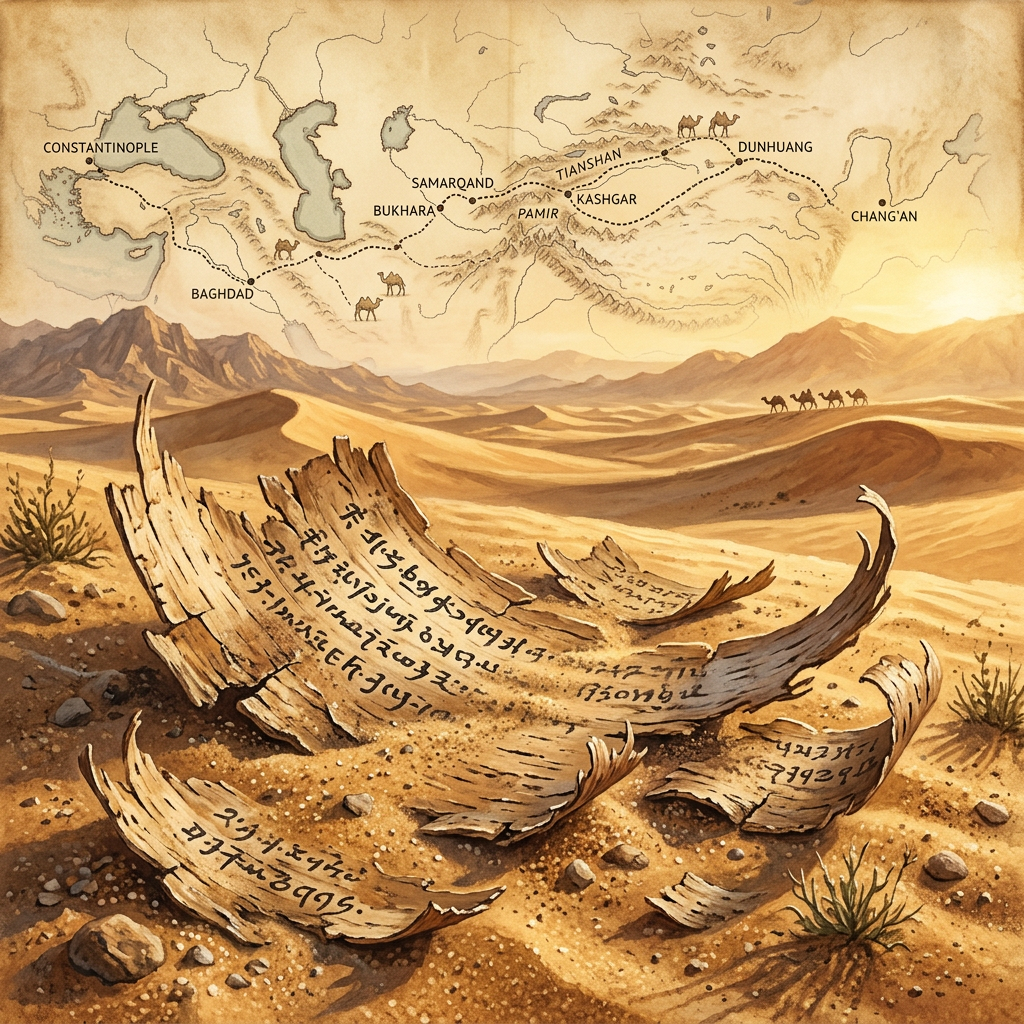
A detailed linguistic study of Khotanese birch-bark scrolls found in the Tarim Basin has revealed a 6th-century translation and commentary on the Rigvedic Creation Hymn (Nasadiya Sukta). Unlike traditional Indian commentaries that emphasize mysticism, this Central Asian version highlights the agnostic and skeptical questions of the original Sanskrit text.
The commentary, written in a mix of Sanskrit and a local Indo-Iranian dialect, argues that the 'unknowability' of the universe's origin is a prerequisite for true spiritual freedom. Researchers from the Silk Road Research Journal state that this proves Vedic philosophical doubts were highly influential along trade routes, shaping the intellectual landscape of pre-Islamic Central Asia and interacting with Manichaean thought.