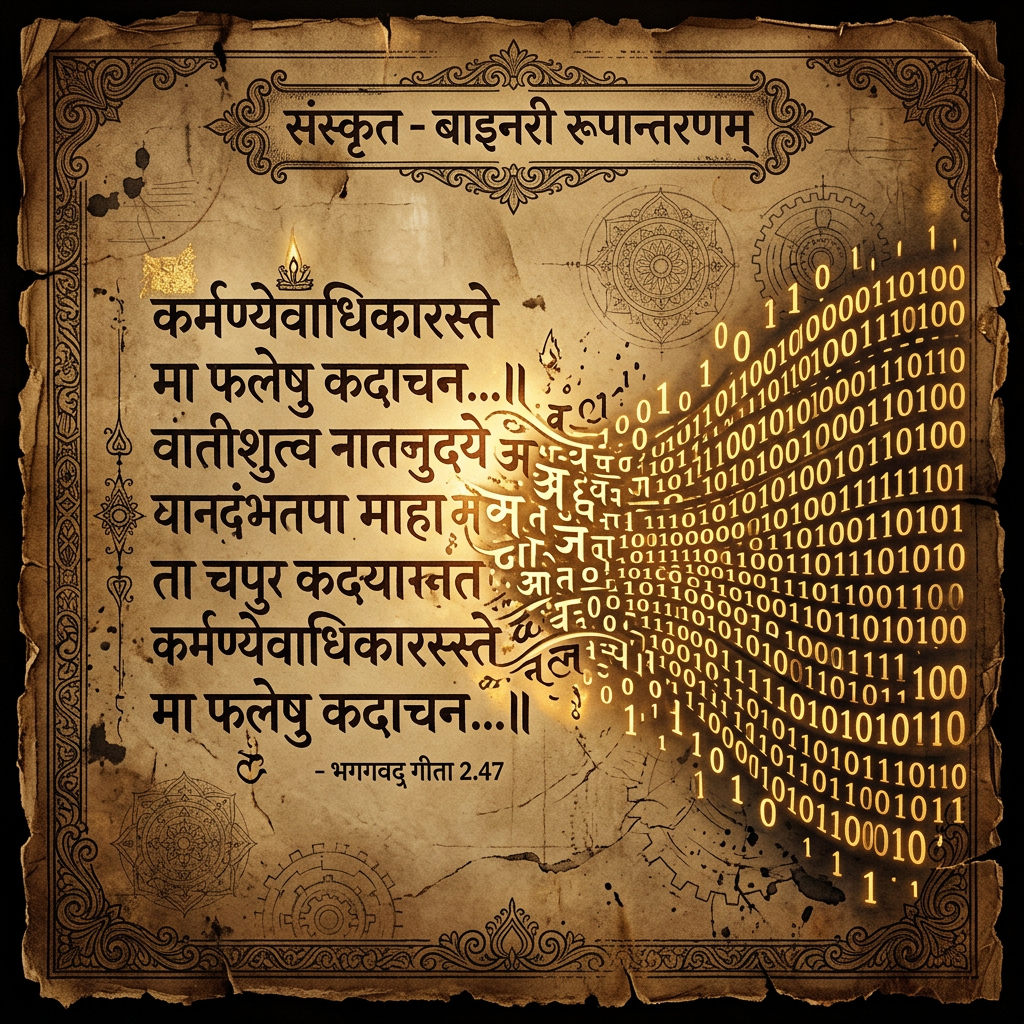
A study led by mathematical historians has identified advanced combinatorial logic in 10th-century Sanskrit manuscripts on Chandaḥśāstra (the science of prosody). The research focuses on the Vrttaratnakara of Kedara Bhatta, demonstrating how ancient scholars used a systematic 'Pratyaya' method to generate all possible combinations of long and short syllables.
The team used computational models to show that these methods are equivalent to binary counting algorithms and Pascal's Triangle. The study argues that these combinatorial structures were not merely decorative but served as a foundational framework for data organization and memory retrieval in the oral transmission of Vedic literature.