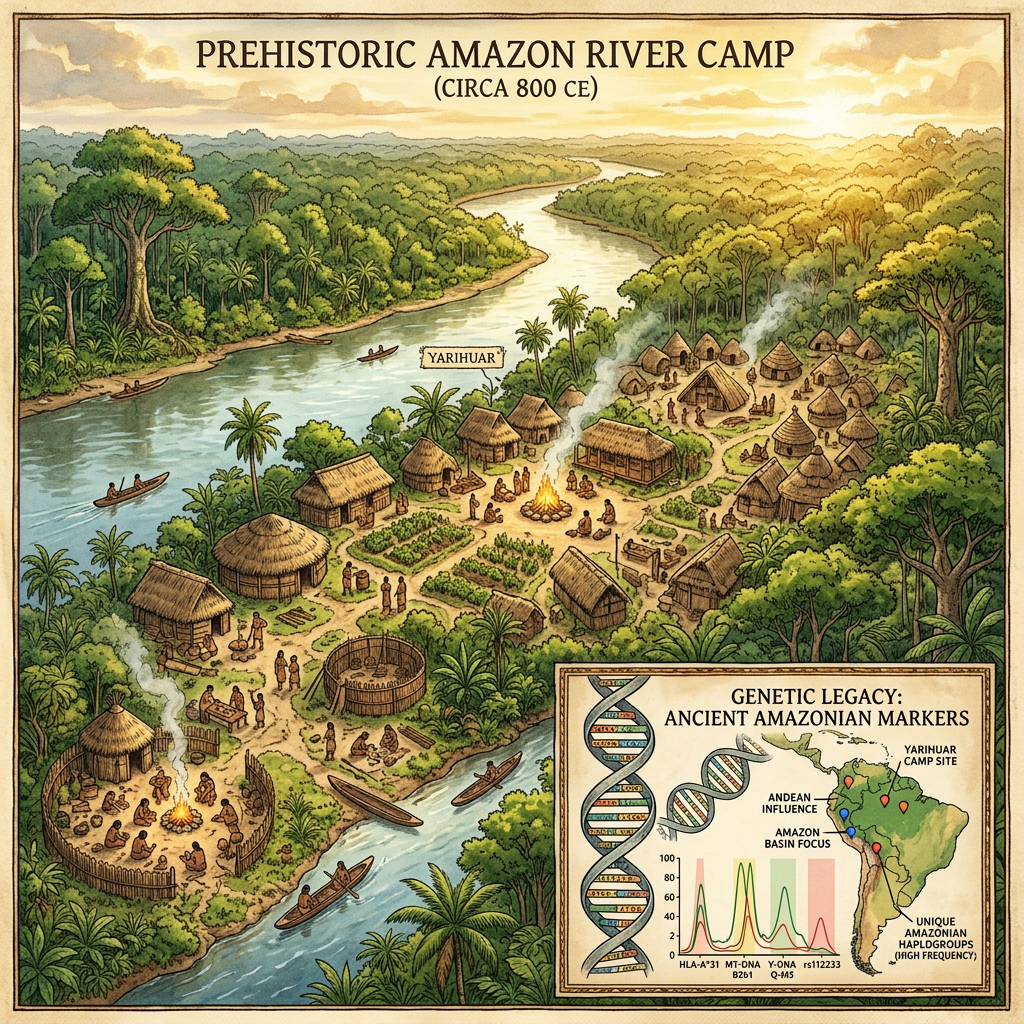
A new study in Cell Reports has mapped the genome of 14,000-year-old human remains found in the deep Amazon, revealing a genetic signature that differs significantly from contemporary Paleo-Indian groups. This "Pulse 4" migration suggests that South America was populated by at least four distinct genetic waves, one of which carried ancestry related to ancient Australasian populations.
The research provides evidence that these early inhabitants possessed sophisticated knowledge of forest management long before the advent of large-scale agriculture. The genetic data also hints at a rapid adaptation to the high-carbohydrate diet provided by wild palm species, marking the earliest known metabolic shift in the Amazon basin.