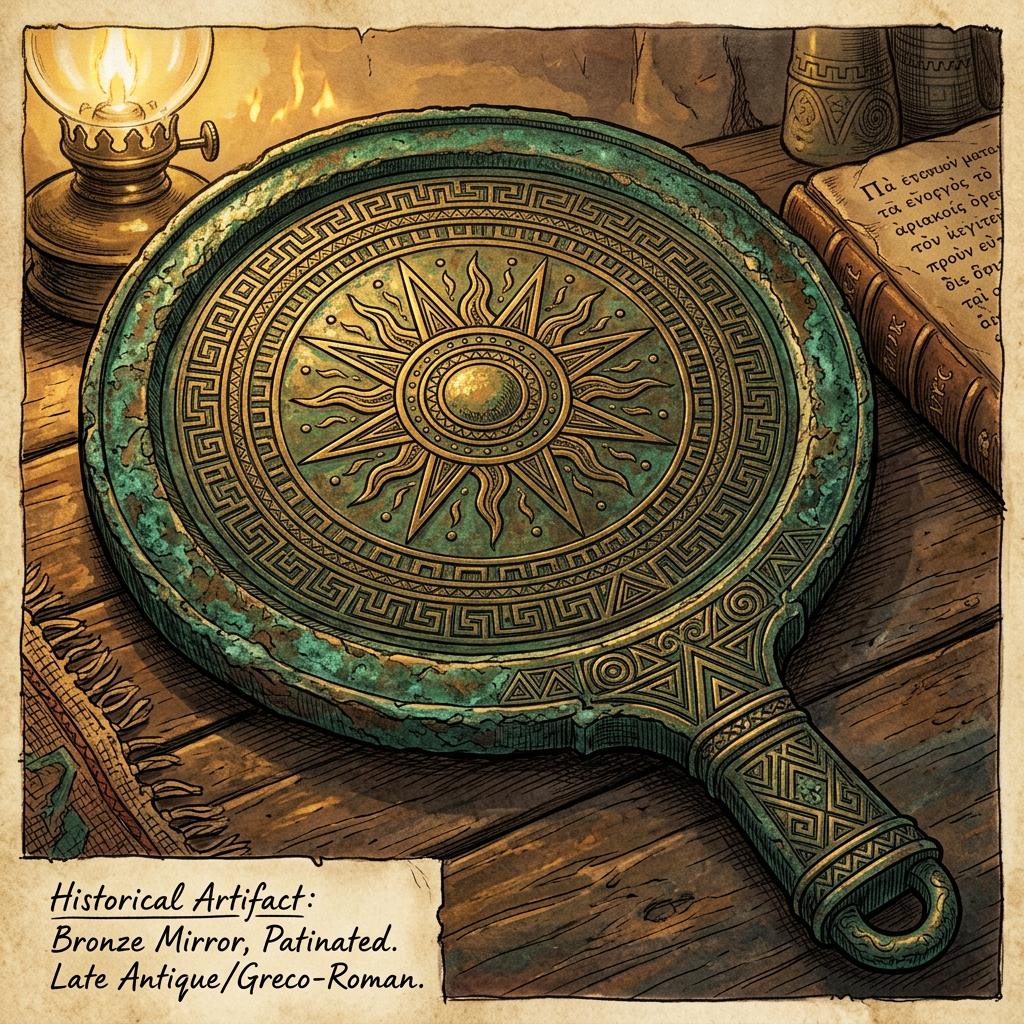
A rare bronze mirror featuring astronomical engravings has been discovered in a chieftain's burial mound in Japan's Kyushu region. Dating to the late Yayoi Period (c. 100 CE), the mirror's reverse side is decorated with a series of precise notches and symbols that correspond to the movement of the sun during the winter and summer solstices. This artifact provides the earliest material evidence of sophisticated solar tracking in ancient Japan.
Archaeologists believe the mirror was not merely a ceremonial object but a functional solar calendar used to determine the start of the rice-planting season. The discovery links early Japanese agricultural rituals directly to advanced celestial observation, showing a much earlier development of native astronomical science than previously recorded in historical texts.