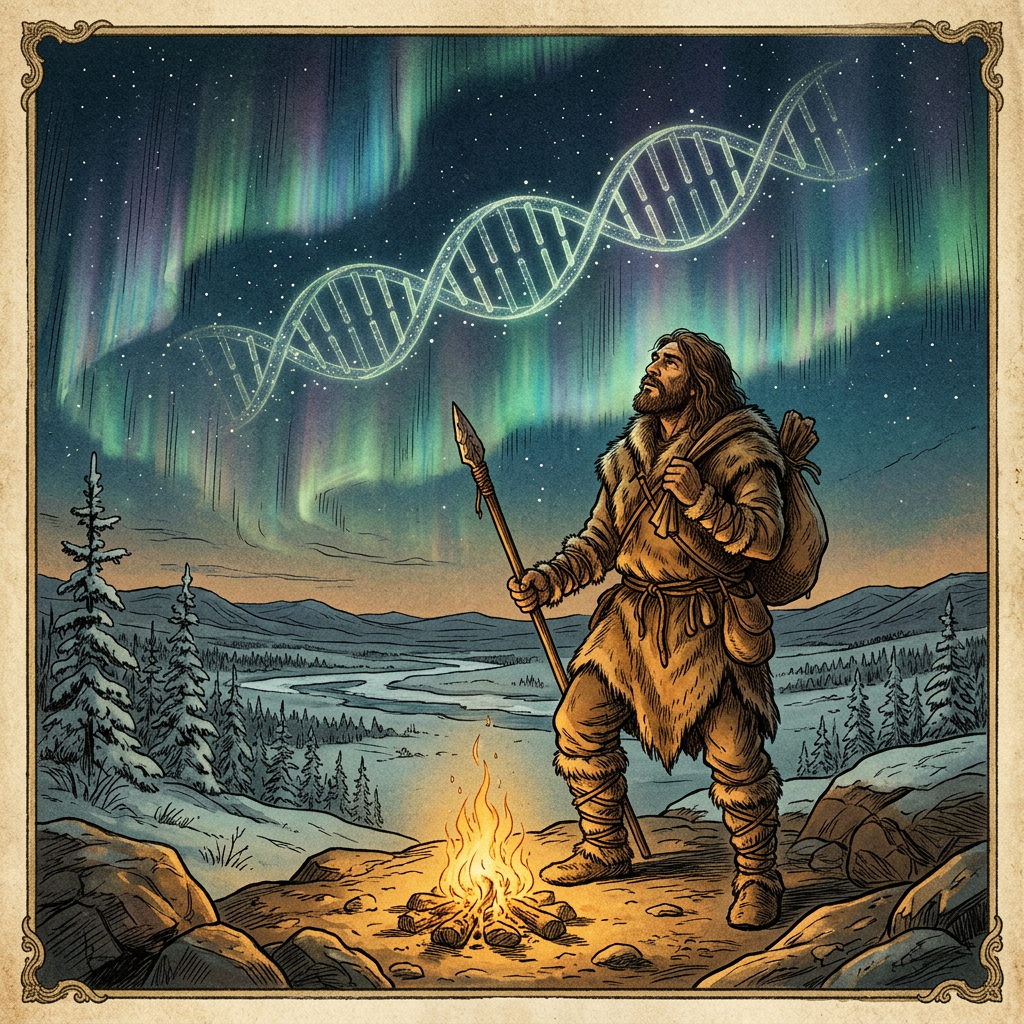
A major anthropological report in Science Reports has analyzed the genomes of late Pleistocene hunter-gatherers from the Trans-Ural region, identifying the earliest known genetic adaptations to Extreme Northern light cycles. The study found specific mutations in the circadian rhythm-regulating genes that likely allowed these populations to thrive during months of polar darkness and constant summer light.
This genetic "signature" provides a roadmap for the movement of early human groups into the furthest reaches of the Northern Hemisphere. The research team also discovered that these populations maintained high levels of genetic diversity despite the harsh environment, suggesting they were part of a larger, highly mobile network of tribes that exchanged information and resources across the Siberian steppe.