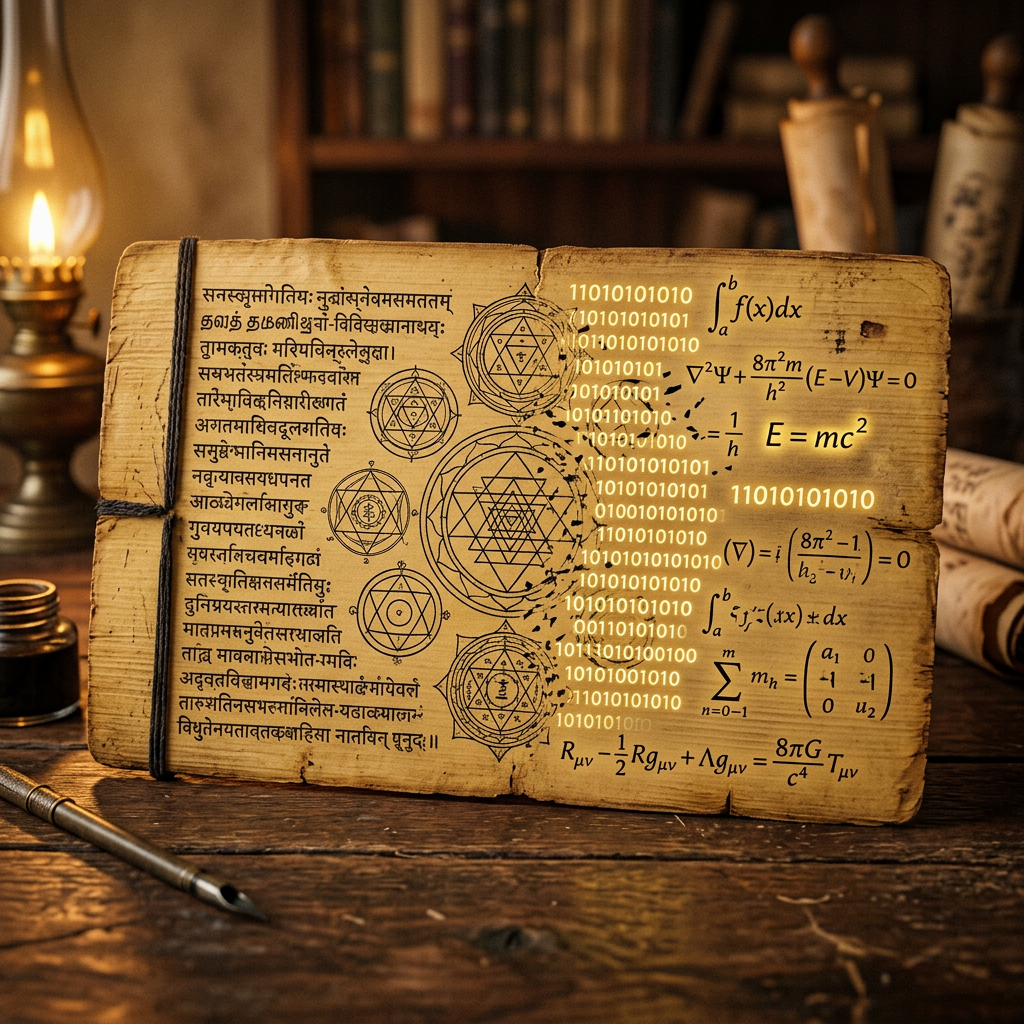
A new publication in the Annals of the History of Mathematics has uncovered evidence of recursive algorithmic logic in the Katyayana Sulba Sutra, a Vedic text primarily known for its geometric instructions for altar construction. The mathematical analysis demonstrates that the text provides a step-by-step procedure for calculating irrational square roots to an accuracy of ten decimal places.
The study argues that these procedures are not merely empirical rules but represent a nascent form of iterative computation. By modeling the instructions as modern code, the researchers showed that the ancient mathematicians had developed a stable algorithm that converges rapidly, predating similar concepts in European mathematics by over a millennium. This research highlights the deep link between ritual geometry and advanced computational theory in ancient India.