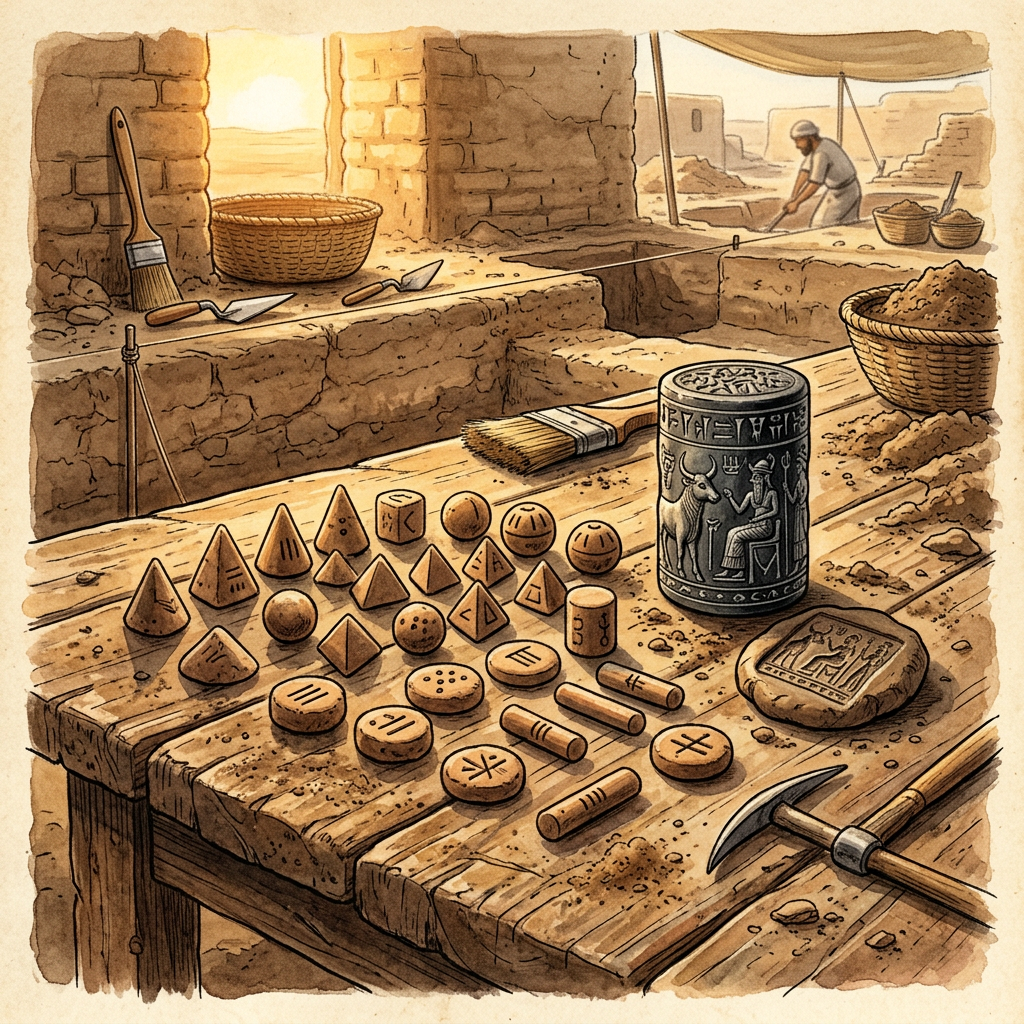
Excavations at a previously unrecorded site near Sidon have revealed a sophisticated administrative center dating to the Early Bronze Age. The structure, characterized by thick limestone walls and paved courtyards, has yielded a cache of over 300 clay tokens used for counting agricultural commodities, representing one of the earliest systems of bookkeeping in the Levant.
The presence of these tokens, alongside several cylinder seal impressions, suggests that the site was a major hub for the redistribution of grain, oil, and wine. Archaeologists believe this center predates the rise of the classical Phoenician city-states and represents a 'proto-Canaanite' phase of urban development where bureaucracy was used to manage surplus resources.
Furthermore, the discovery of Egyptian-style pottery and Anatolian obsidian at the site indicates that the inhabitants were active participants in a burgeoning international trade network. This find provides essential clues into the origins of the complex social structures that would eventually lead to the alphabet and the great maritime empires of the Mediterranean.